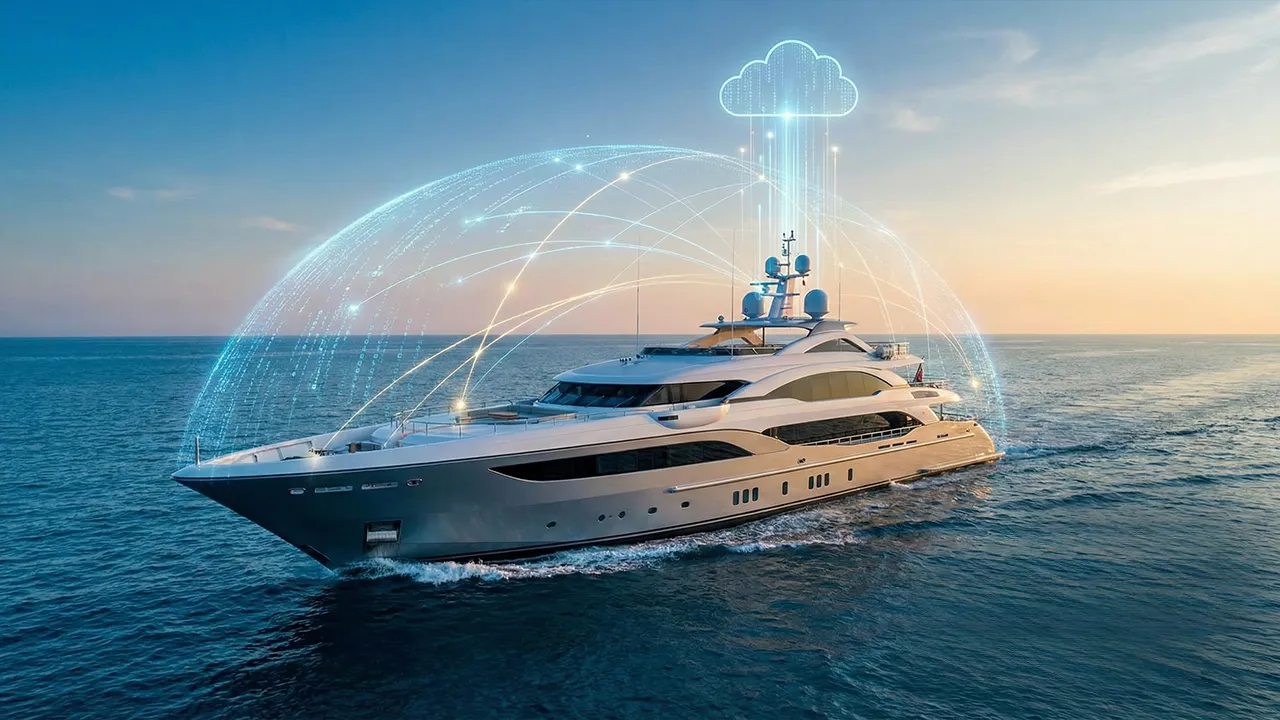
A Virtual Leased Line is becoming the new gold standard for luxury vessels that require enterprise stability on the open sea. Modern yachts operate as digital hubs, streaming content, running smart systems, managing navigation data and hosting business communications. For these operations to remain stable, connectivity must be uninterrupted, even in remote regions.
This case study showcases how a luxury yacht achieved exceptional performance by using comBOX VLL to build a high-speed, bonded connection that consistently delivers 500Mbps+ download and 100Mbps+ upload across continents.
1. Understanding Virtual Leased Line Technology at Sea
A Virtual Leased Line is a dedicated, high-speed, encrypted tunnel created between the vessel and comBOX’s global cloud infrastructure. Unlike traditional leased lines, which require fixed physical circuits, VLL is created virtually by bonding multiple Internet connections into a single, unified pathway.
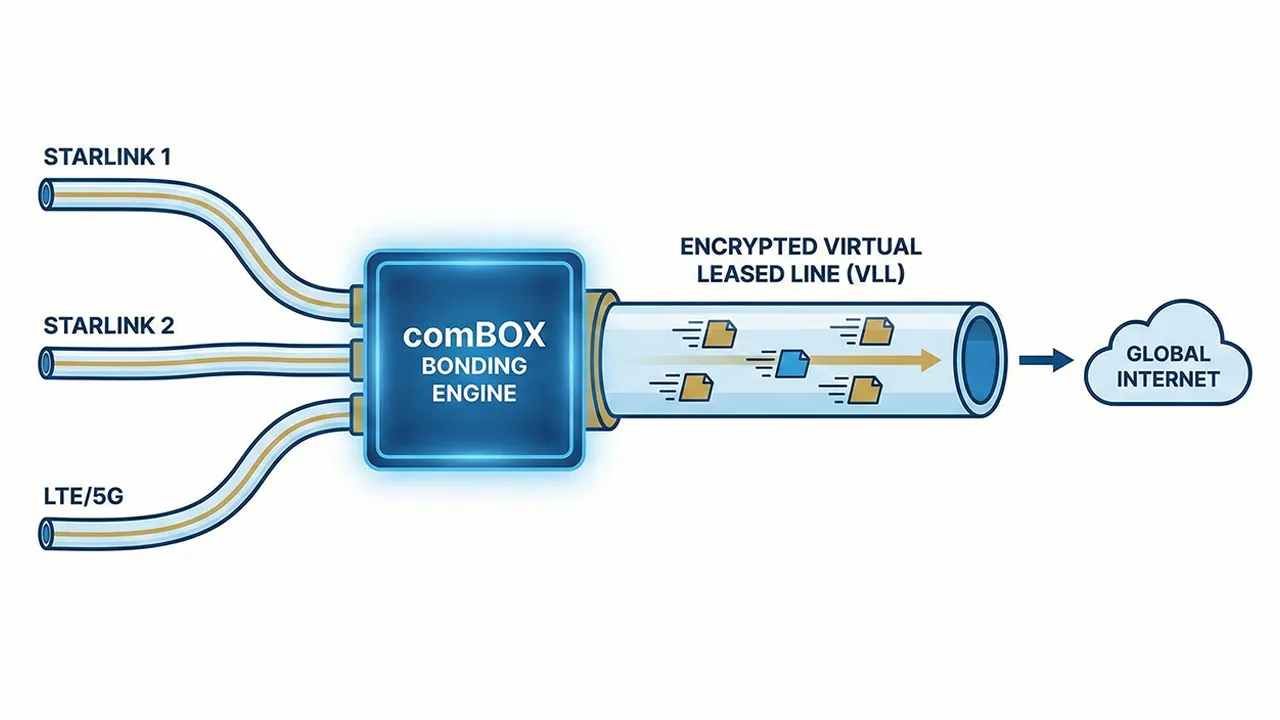
This means every packet travels through a private, optimized, enterprise-level channel regardless of the link’s physical limitations.
Key benefits include:
• Packet-level distribution
• Increased bandwidth
• Lower latency through intelligent routing
• Transparent failover
• Optimized performance for cloud and real-time applications
2. Why Luxury Yachts Need a Virtual Leased Line
Yachts today function as floating offices, luxury entertainment venues, and always-on communication hubs. Yet maritime environments introduce unique obstacles that regular satellite links cannot fully solve.
Connectivity challenges addressed by a VLL include:
1. Streaming and Live Video Usage
Guests often stream in 4K, conduct live video calls or upload high-resolution media.
2. Real-Time Navigation and Telemetry
Navigation updates and system monitoring require low-latency and uninterrupted connectivity.
3. Beam Transition Instability
Starlink beam changes can cause micro-drops unless mitigated by packet-level bonding.
4. Cloud Access and Business Apps
Remote work, cloud drives and collaboration platforms need reliable TCP acceleration.
5. Remote Technical Management
Yacht engineers, crew and shore teams require continuous remote access.
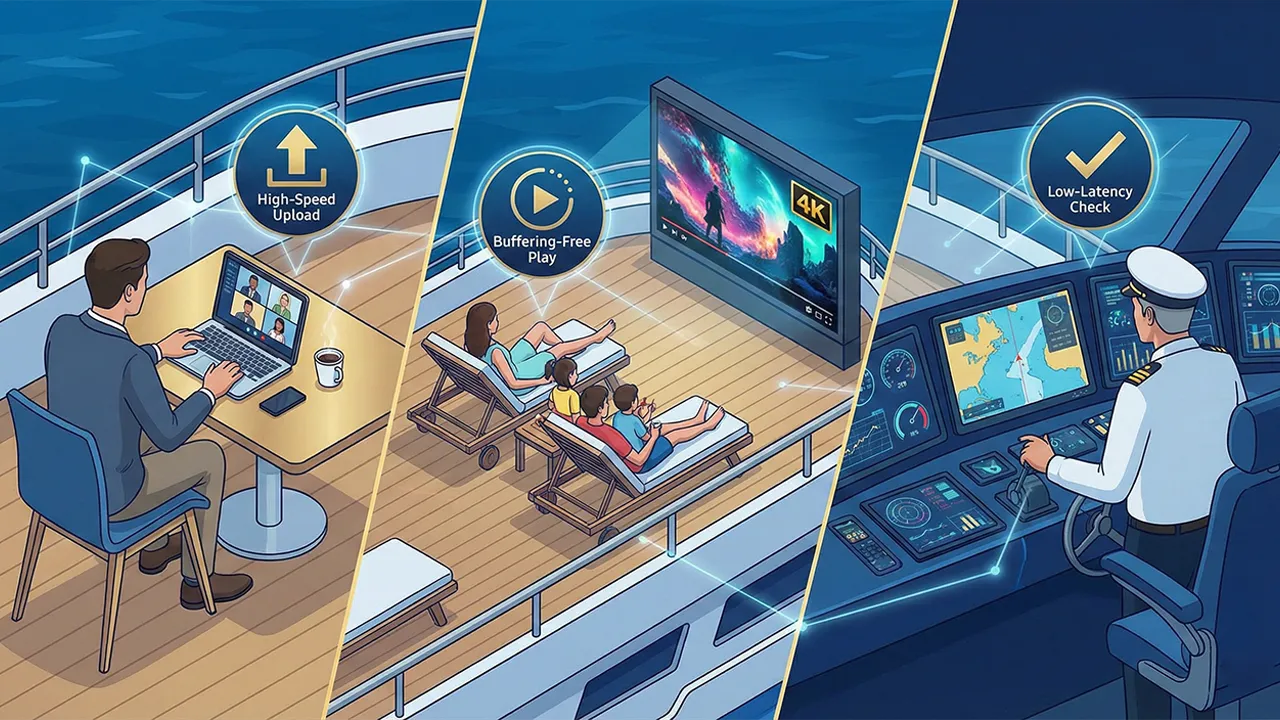
A Virtual Leased Line eliminates these issues by guaranteeing stable sessions, higher throughput and global routing logic.
3. The comBOX VLL Architecture
The yacht was equipped with a robust multi-layer connectivity stack powered by comBOX VLL, including:
• Two Starlink terminals bonded for throughput and redundancy
• One LTE/5G router integrated for additional reliability
• A comBOX multi-WAN router
• A comBOX VLL subscription establishing the Virtual Leased Line
• Advanced WAN optimization technologies
This architecture aligns with comBOX documentation and features, including packet-level distribution, QoS, compression, FEC, and centralized management
Why this matters:
A VLL does not simply “combine” connections. It transforms them into a single enterprise-grade circuit, enabling predictable performance even during mobility, weather changes or congestion.
4. How Bonded Connectivity Works Onboard
The comBOX system distributes packets simultaneously across all connected WAN links. This ensures that even large single-session transfers benefit from full aggregate bandwidth.
Core technologies include:
Packet-Level Bonding
Real bandwidth aggregation across Starlink, LTE/5G and additional links.
Smart Transparent Failover
No IP address changes, zero session interruption, fully transparent to users.
Performance Enhancing Proxy
Boosts TCP performance over high-latency and congested paths, critical for satellite links.
Forward Error Correction
Duplicating real-time packets across the two best WAN paths guarantees minimal jitter and loss.
Real-Time Compression
Reduces bandwidth consumption and accelerates data transfers.
Each component is designed to protect performance in situations where traditional maritime connectivity breaks down.
5. Global Routing with International PoPs
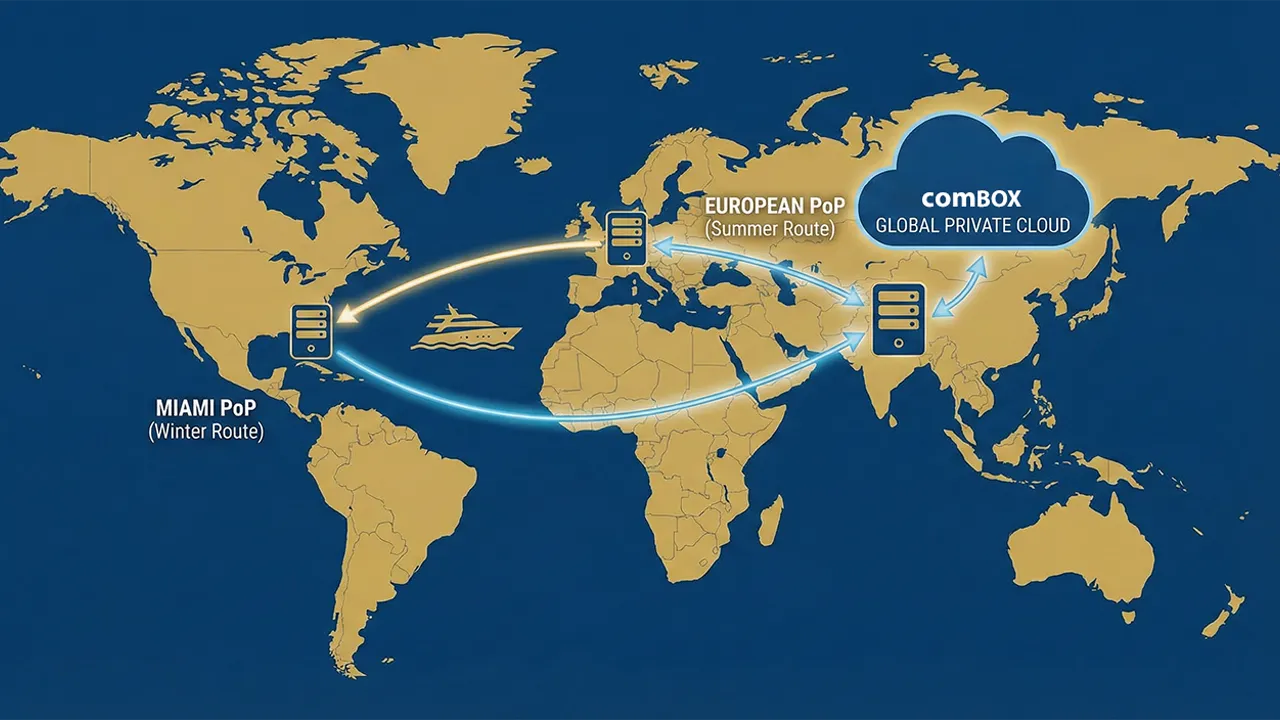
The yacht travels across continents. With a Virtual Leased Line, routing adjusts based on geographic region:
Mediterranean (Summer Season)
Traffic is routed through the European PoP, minimizing latency to cloud services, streaming apps and navigation servers.
Caribbean (Winter Season)
Traffic uses the Miami PoP, ensuring optimal routing from the western hemisphere.
This geographical logic, supported by comBOX’s global private cloud infrastructure, ensures:
• Lower ping times
• Reliable cloud performance
• Faster user experience
• Consistent connection stability
This capability aligns with comBOX’s global server location strategy documented in the VLL technology overview
6. Failover, Public IP Access and Real-Time Optimization
A Virtual Leased Line is more than bandwidth aggregation. It brings enterprise features that luxury vessels need.
1. Public Static IPs
Essential for remote access to onboard systems, CCTV, navigation dashboards, maintenance platforms and telemetry.
2. Transparent Failover Logic
If one Starlink link drops due to beam transition, packets reroute instantly.
3. Cloud Application Optimization
WAN optimization ensures stability for VoIP, VPN, remote desktops and cloud storage.
4. Centralized Monitoring Interface
Shore teams monitor the vessel’s network live through comBOX’s secure management GUI.
5. Security at the Node Level
4096-bit RSA key authentication and optional encrypted tunnels protect bonded traffic.
These features are documented under comBOX VLL’s advanced security, QoS and node-level authentication sections
7. Performance Results
After deploying comBOX VLL, the yacht achieved:
• 500Mbps+ bonded download
• 100Mbps+ bonded upload
• Smooth performance during Starlink beam transitions
• LTE/5G redundancy during satellite fluctuations
• Fast VPN and cloud application usage
• Full stability for business and entertainment applications
This is the level of performance expected from top-tier enterprise networks — now available at sea through Virtual Leased Line technology.
Why a Virtual Leased Line Future-Proofs Yacht Connectivity
Yacht owners increasingly require:
• Seamless remote work
• Consistent cloud access
• Entertainment systems without buffering
• Advanced navigation data flows
• Onboard IoT and automation
• Reliable communications for guests and crew
• Managed connectivity from anywhere in the world
A Virtual Leased Line ensures that yachts are prepared for:
- New generations of LEO satellites
- Higher-bandwidth 5G and 6G coverage
- Expanding smart-yacht ecosystems
- Global operations with varying ISPs
- Cloud-centric workflows
With comBOX VLL, the vessel is no longer at the mercy of individual satellite or cellular limitations. The network behaves like a private enterprise circuit engineered specifically for mobility.
FAQ
Does a Virtual Leased Line still help if I already have multiple Starlink terminals on the yacht?
Even with multiple Starlinks, you still face beam switching, jitter, packet loss and micro-interruptions that disrupt sessions. A comBOX Virtual Leased Line stabilizes these links by bonding them at the packet level, meaning the system uses both terminals simultaneously while masking Starlink’s micro-drops. This creates a single, high-performance circuit that behaves like enterprise fiber at sea.
How does comBOX keep video calls and streaming stable during Starlink beam transitions?
Beam transitions normally break real-time sessions for 1–3 seconds. comBOX VLL uses Transparent Same IP Failover and Forward Error Correction, sending redundant packets on the two best WAN links. If one Starlink drops, packets instantly switch to another path with no IP change or session loss. Guests never see the interruption.
Can a Virtual Leased Line improve cloud access, VPN performance and remote monitoring from shore?
The VLL includes a Performance Enhancing Proxy, which accelerates TCP traffic across high-latency or congested satellite paths. This makes cloud apps, VPNs, CCTV and remote dashboards load faster and operate more reliably, even when the yacht is far from terrestrial coverage. This capability is fully aligned with comBOX’s WAN optimization stack
How does comBOX decide which WAN link to use when the yacht moves between regions?
Routing is automatic Boss. The comBOX VLL connects the yacht to the nearest international PoP. In Europe, traffic flows through the EU PoP. In the Caribbean, it shifts to Miami. This regional logic ensures lower latency, better cloud performance and a consistent user experience across seasons, entirely hands-free.
Do I need a static public IP on the yacht, and how does comBOX handle that?
Yes if you use remote management, CCTV, navigation dashboards, vessel telemetry or external access systems. comBOX VLL provides public static IPs directly from the aggregation server. Even if local WAN links fail or change IPs, the yacht’s public IP remains stable because it comes from the comBOX cloud, not the ISP.
What happens if both Starlink terminals face heavy congestion or weather issues?
The system instantly shifts traffic to the LTE/5G link without dropping active sessions. comBOX continuously measures packet loss, latency and jitter across all links and prioritizes the healthiest path in real time. This protects the network during storms, congested marinas or low-visibility satellite conditions, scenarios where traditional SAT-only setups degrade.


