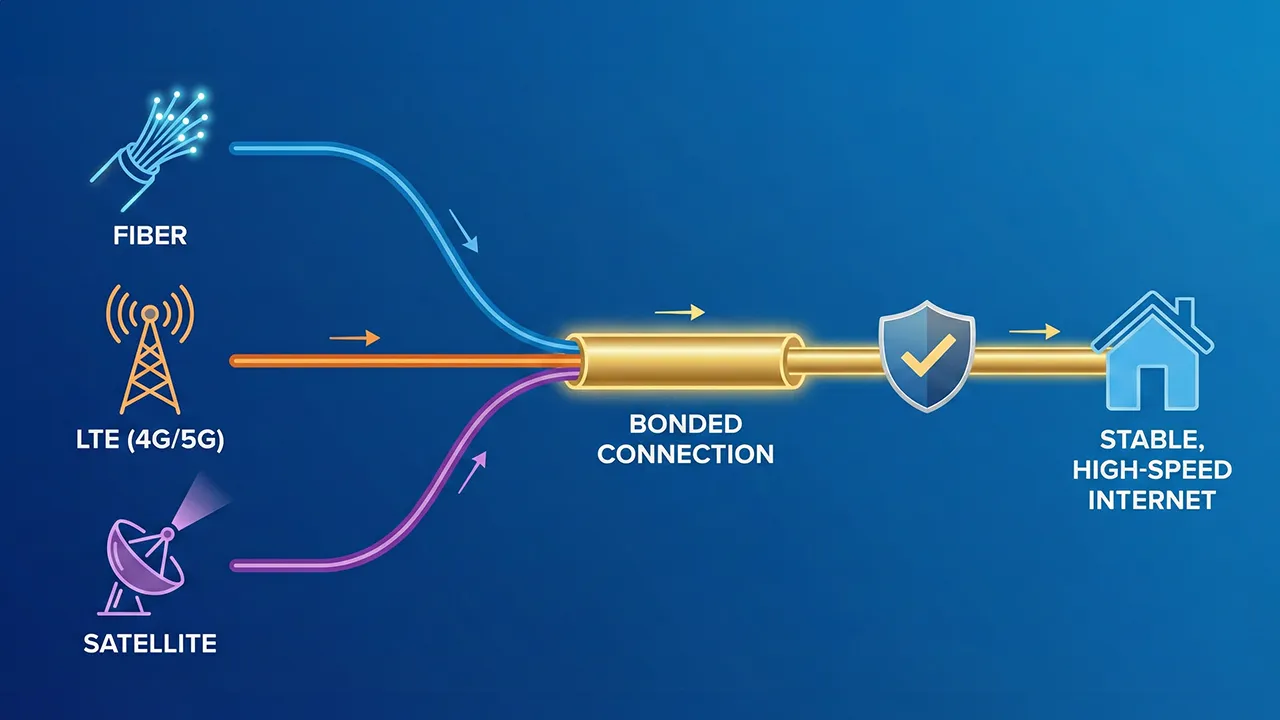
Bonding Internet connections has become one of the most important methods for businesses that need stable, high-performance connectivity. As companies adopt fiber, wireless, satellite, and mobile links to stay online, mixing these diverse connections introduces new challenges. But with the right technology and strategy, these challenges can be turned into major advantages.
What Is Bonding Internet Connections?
Bonding Internet connections refers to the process of combining two or more Internet links—such as fiber, coaxial, 4G/5G, wireless, or satellite—into one unified, high-performance connection. This provides:
- Higher throughput
- Better reliability
- Lower latency
- Smooth failover
- Improved user experience
However, bonding these diverse links isn’t always straightforward.
Why Bonding Internet Connections Is Challenging
1. Diverse Link Characteristics Create Balancing Issues
Different connection types behave very differently:
- Fiber: high speed, low latency
- Wireless: medium speed, variable latency
- Satellite: high latency, weather-dependent
- Mobile (4G/5G): fluctuating throughput
Trying to combine these into a single stable connection without interruptions is difficult. Speed, latency, jitter, and reliability vary dramatically, and without the right bonding algorithm, the network can underperform.
2. Specialized Bonding Hardware and Software Are Often Required
To effectively bond heterogeneous connections, organizations typically need:
- Multi-WAN bonding routers
- Bonding aggregation servers
- Link-state monitoring tools
- Quality-of-Service engines
- Traffic optimization software
This increases complexity, cost, and maintenance requirements, especially when using legacy systems.
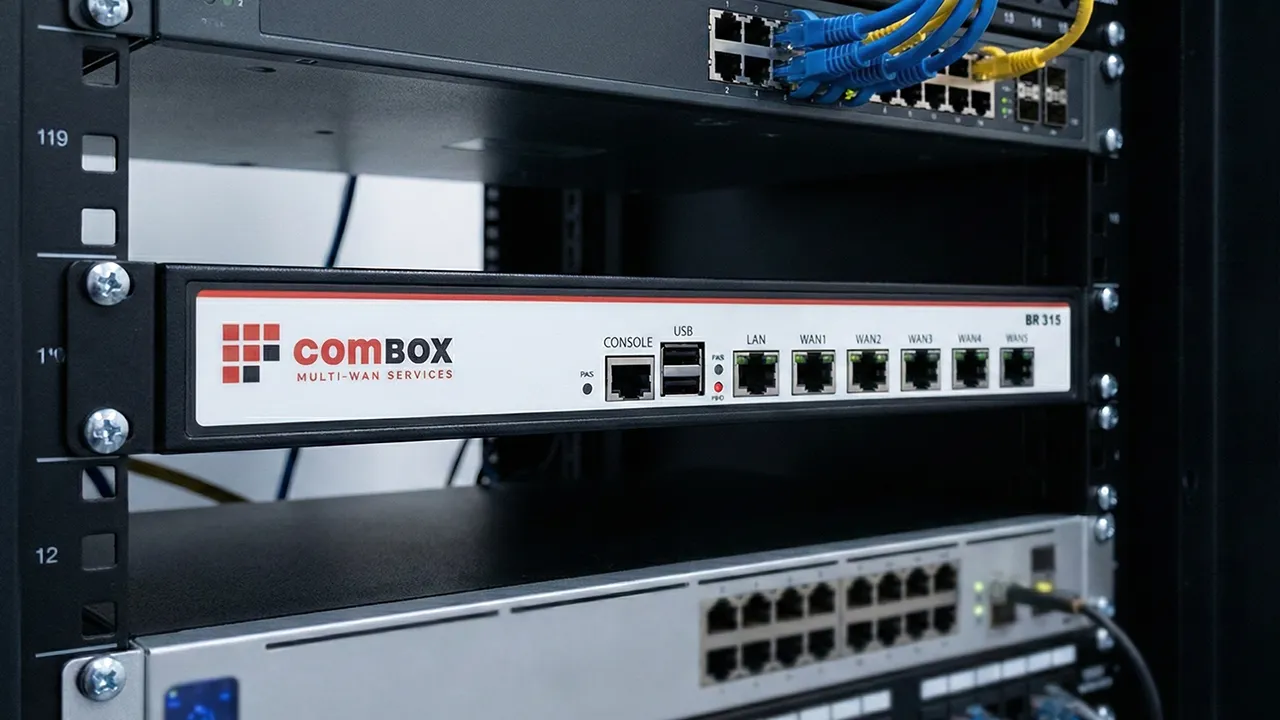
A multi WAN device installed in a server rack demonstrating hardware used for bonding internet connections
3. External Factors Affect Performance
Bonding Internet connections across diverse technologies means the final performance is influenced by:
- Weather (wireless, mobile, satellite)
- Network congestion (ISP routes)
- Line-of-sight interference
- Overloaded towers or backhauls
This makes consistent bonding performance harder to achieve, especially in rural areas or during peak usage.

A storm scene shows a satellite dish struggling with interference highlighting why bonding internet connections can improve reliability
4. Monitoring and Troubleshooting Become More Complex
When a bonded connection consists of 3, 4, or even 8 different links, each with its own:
- Latency
- Packet loss
- Jitter
- Throughput
- Congestion level
…it becomes difficult to quickly identify bottlenecks or failures.
Real-time visibility is essential, but many bonding tools lack proper analytics, forcing network engineers into lengthy troubleshooting sessions.
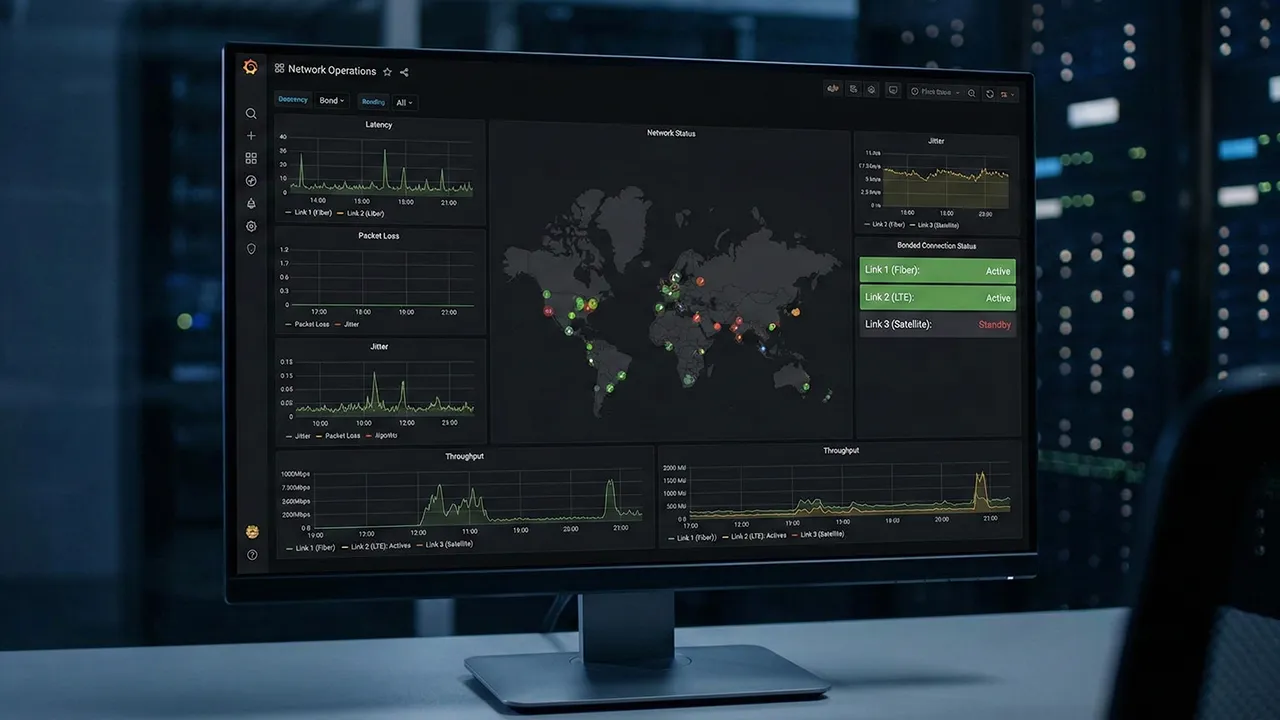
A network operations display shows link performance and status for systems using bonding internet connections
5. Performance Varies by User Location and Usage Patterns
A retail branch, construction site, office building, and moving vehicle will each produce wildly different usage patterns. As a result, a bonding configuration that works well in one location might underperform in another.
Without adaptive routing and continuous health monitoring, bonded networks degrade quickly.
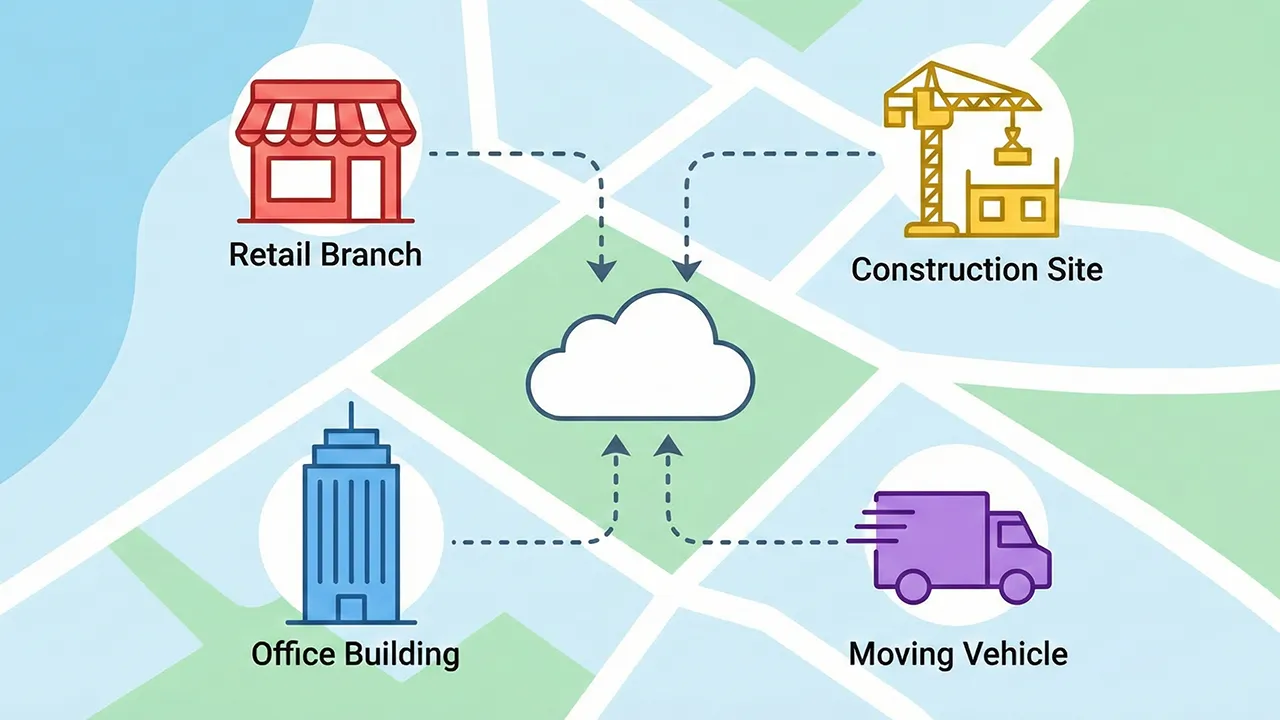
A simple map graphic shows a retail branch an office building a construction site and a moving vehicle all linked to a central cloud representing bonding internet connections
How Modern Technology Solves Bonding Challenges
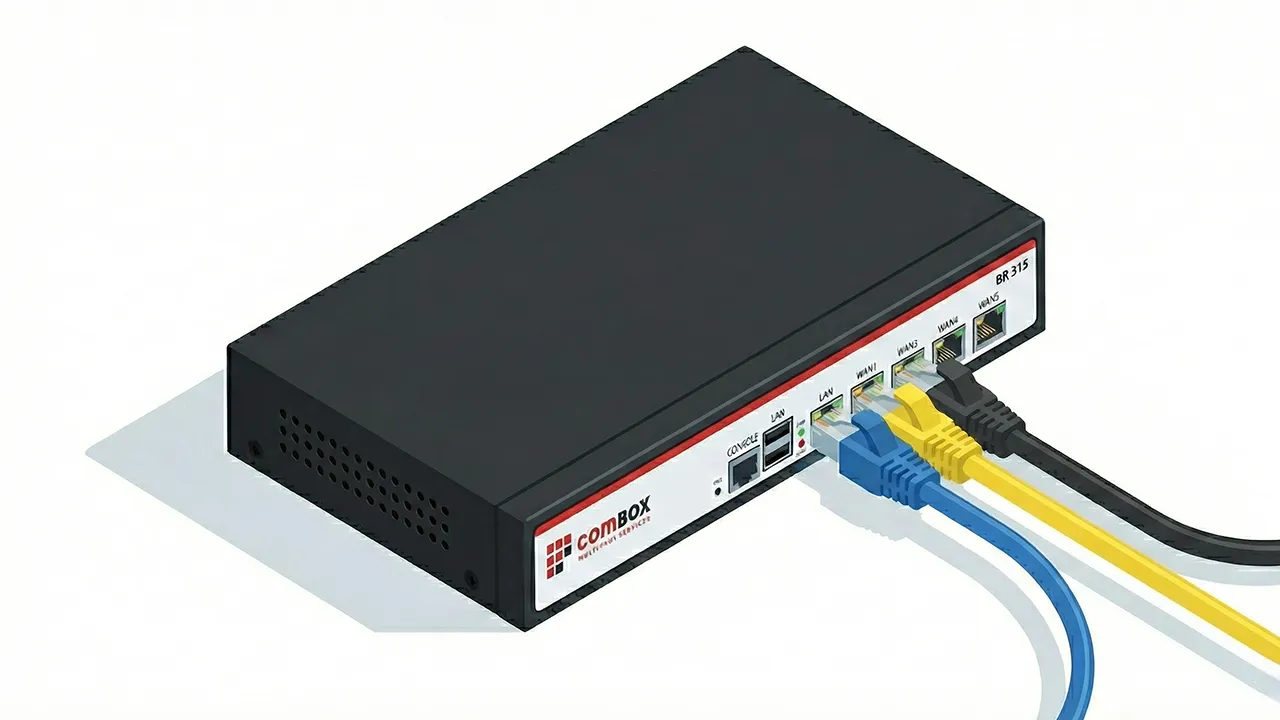
A multi port network unit showing how different cables plug in to support bonding internet connections
comBOX Networks: A Smarter Way to Bond Internet Connections
comBOX Networks has developed an advanced multi-WAN bonding technology that directly addresses the challenges discussed above. Their system integrates:
- Real-time link health monitoring
- Dynamic routing decisions based on live metrics
- Adaptive bonding algorithms for diverse links
- Automatic throughput optimization
These features ensure that bonding Internet connections works smoothly, even when combining fiber, LTE, wireless, and satellite at the same time.
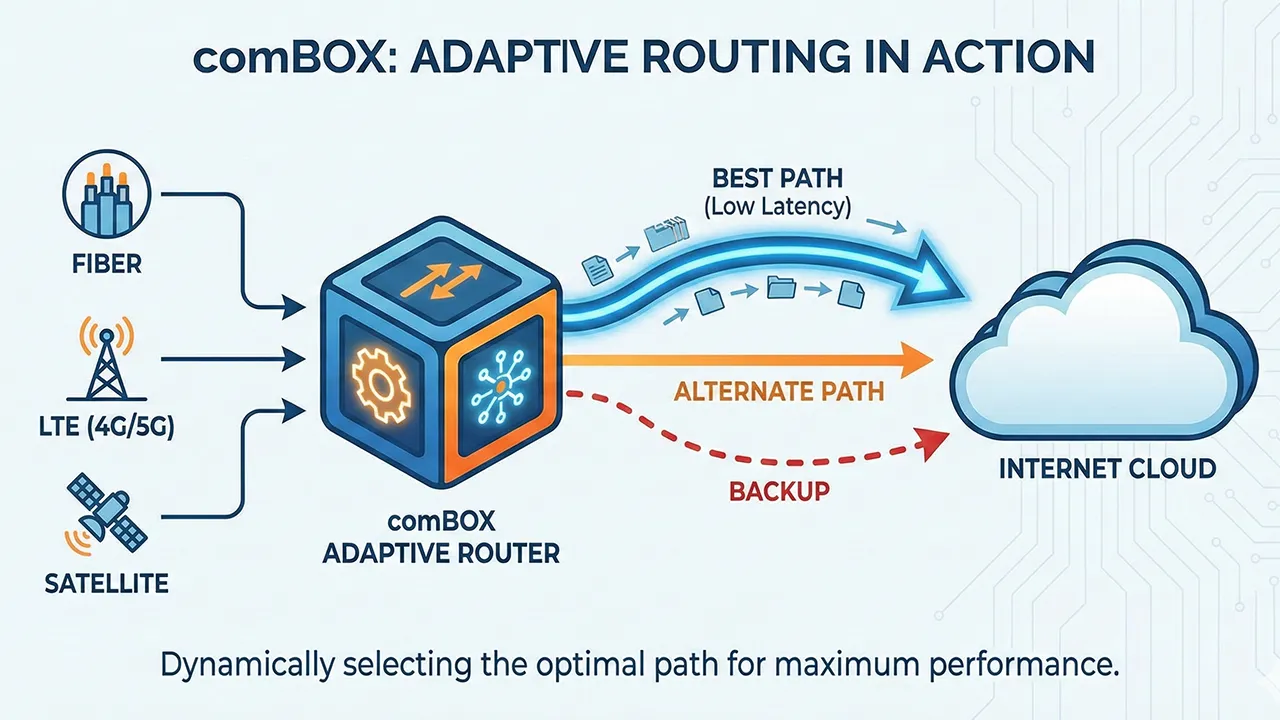
An illustrated network flow shows how an adaptive router chooses the best path to enable bonding internet connections
Real-Time Link Monitoring for Optimal Routing
The bonding algorithm continuously measures:
- Latency
- Jitter
- Packet loss
- Congestion
- Available throughput
This allows the router to choose the best path for each data packet in real time—eliminating bottlenecks and improving overall stability.

A monitoring panel shows worldwide link paths and performance metrics that support bonding internet connections
Regional Data Centers Reduce Congestion
The comBOX bandwidth aggregation servers are hosted in:
- Reliable regional data centers
- Multihomed Internet facilities
- Locations with direct peering routes
This helps bypass congested ISP networks and significantly improves consistency, especially during peak hours or heavy traffic.
Why Businesses Benefit from Bonding Internet Connections
Bonding Internet connections isn’t just about speed. It provides:
- Essential redundancy for uptime
- Stable video conferencing
- Higher-quality VoIP calls
- Smooth cloud application performance
- Faster uploads and backups
- Reliable remote work connectivity
From retail stores to industrial sites, mobile clinics, MSPs, logistics fleets, and smart-city deployments—bonding solves connectivity challenges that single ISPs cannot.
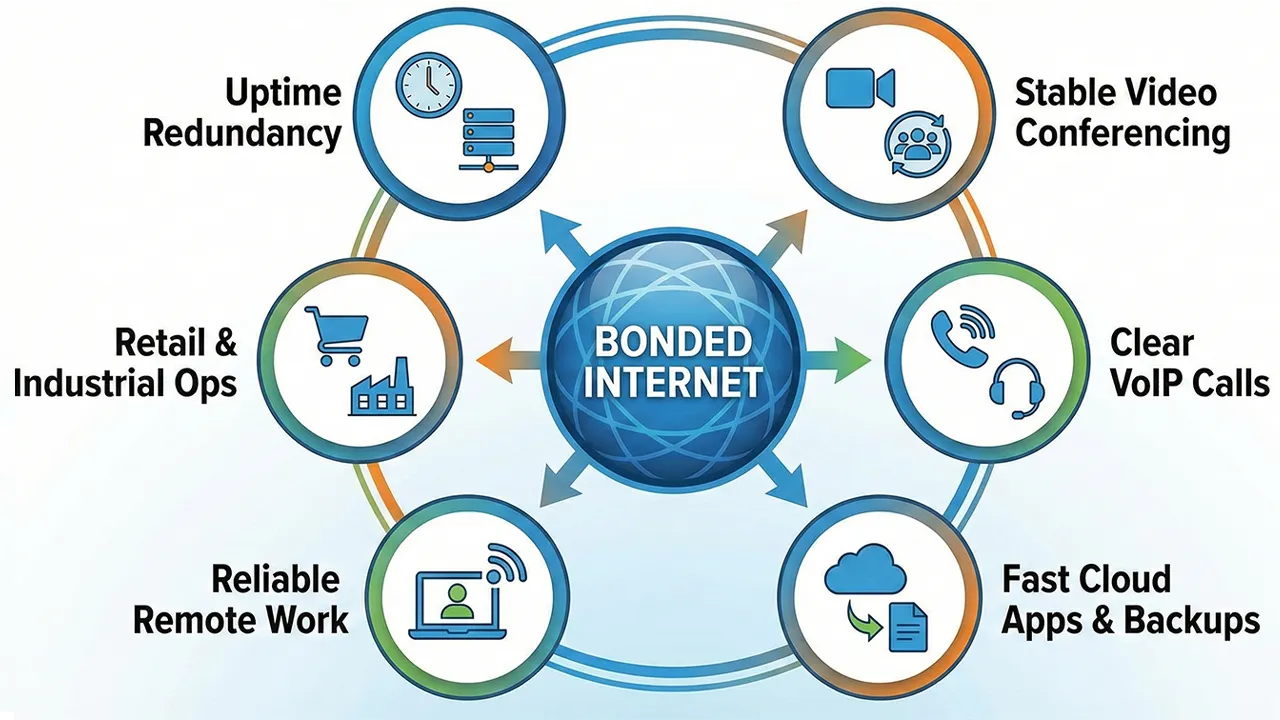
A circular infographic highlights advantages such as uptime redundancy stable video clear VoIP and reliable remote work made possible by bonding internet connections
Proven Expertise in Multi-WAN Bonding
The comBOX Networks team has helped organizations across many industries implement high-performance bonded Internet solutions using best practices.
Whether you need:
- A high-availability branch network
- A mobile or temporary connectivity solution
- A backup solution for mission-critical operations
- A multi-carrier bandwidth upgrade
…their engineers can guide you through the entire process.
Contact comBOX Networks for a free consultation or book a risk-free demo to see how bonding Internet connections can transform your business.

A partnership themed illustration shows two hands shaking with global and growth icons representing collaboration supported by bonding internet connections
FAQ
What does “bonding Internet connections” mean in comBOX’s context?
Bonding Internet connections means combining two or more distinct Internet links, whether fiber, coaxial, 4G/5G, wireless, or satellite, into a single unified connection. The result is higher throughput, better reliability, reduced latency, smooth failover across links, and an overall improved user experience.
Why is bonding Internet connections challenging when combining different types of links (e.g. fiber + satellite + cellular)?
Because different link types exhibit vastly different behavior, fiber offers high speed and low latency, wireless/cellular links may fluctuate in throughput and latency, and satellite connections often carry high latency and weather-dependency. Without a sophisticated bonding algorithm and adaptive infrastructure, combining them risks underperformance because of balancing issues, variable latency/jitter, and inconsistent reliability.
How does comBOX overcome those technical challenges to deliver reliable bonded connectivity?
comBOX uses an advanced multi-WAN bonding solution that integrates real-time link health monitoring, dynamic routing based on live metrics, adaptive bonding algorithms for heterogeneous links, and automatic throughput optimization. It dynamically assesses latency, jitter, packet loss, congestion, and available throughput per link, then routes each packet over the best available path in real time, enabling stable and efficient bonding even across mixed link types.
What business benefits does bonding Internet connections provide for enterprises?
Enterprises using bonding enjoy essential redundancy for uptime, stable video conferencing and VoIP, smooth cloud-based application performance, faster uploads and backups, and reliable connectivity for remote work, branch offices, logistics sites, fleets or mobile crews. For many businesses, retail, industrial, logistics, remote sites, bonding solves connectivity challenges that single-ISP setups cannot reliably address.
What types of deployment scenarios or use cases are suitable for comBOX’s bonding solutions?
Use cases include high-availability branch networks, mobile or temporary connectivity (e.g. field offices, mobile clinics, remote sites), backup or failover solutions for mission-critical operations, and multi-carrier bandwidth upgrades. The bonding works across fixed and wireless infrastructures, making it useful in diverse contexts — from corporate offices and retail chains to logistics, remote locations, or hybrid fixed/mobile setups.
How can enterprises evaluate whether bonding makes sense for them before committing?
comBOX offers a risk-free trial / demo option. This enables prospective customers to test how bonding improves their connectivity, by combining their existing lines and evaluating performance, reliability, and failover behaviour , before committing to a longer-term service bundle.


