
Bonding multiple cellular connections has become a critical solution for businesses that depend on high performance internet. As organizations increasingly rely on cloud applications, real time communication, and remote operations, the ability to combine multiple mobile networks into one stable and fast connection is more valuable than ever.
Why Bonding Multiple Cellular Connections Matters
Businesses that operate using only a single mobile network face unpredictable downtime, weak coverage, and inconsistent speeds. By bonding multiple cellular connections, companies gain the resilience and performance needed for mission critical operations.
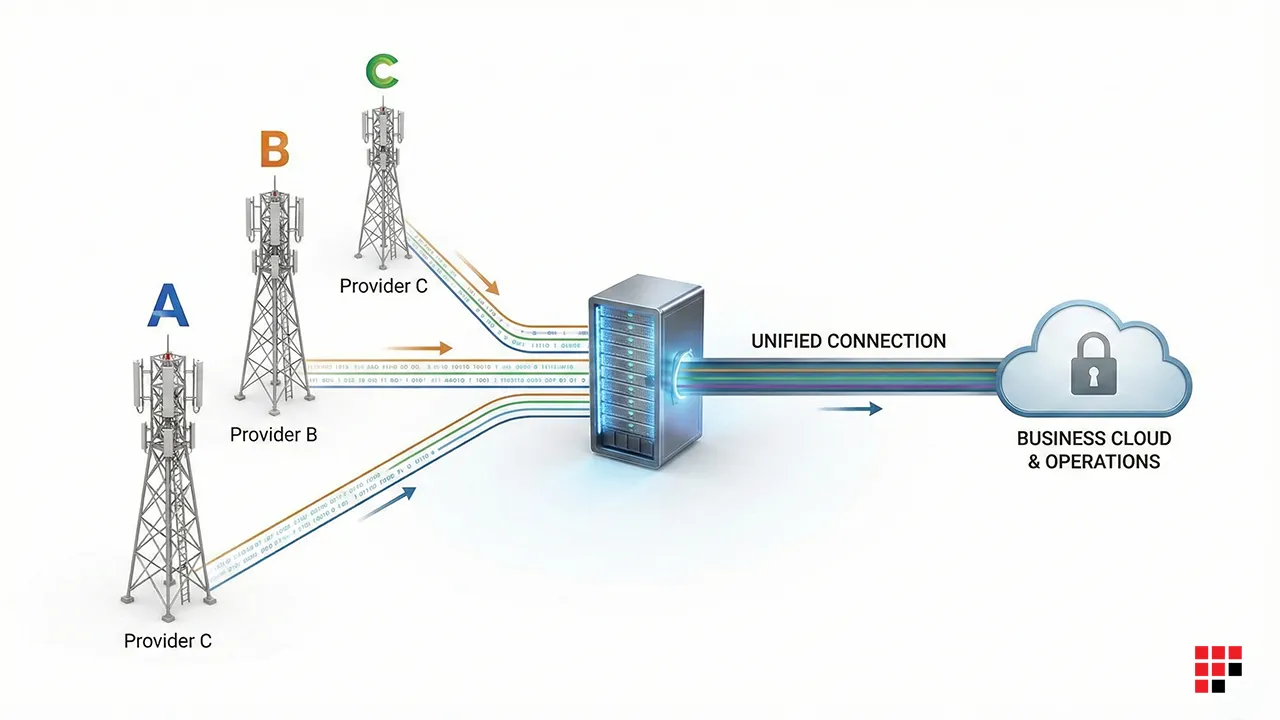
Illustration of how bonding multiple cellular connections merges signals from different providers into a single reliable link for business systems
7 Powerful Advantages of Bonding Multiple Cellular Connections
1. Stable and Consistent Internet Performance
Bonding multiple cellular connections ensures stable connectivity by combining different networks into a single reliable stream. If one operator experiences congestion or failure, the others maintain connectivity. This results in continuous high quality performance even during peak traffic periods.
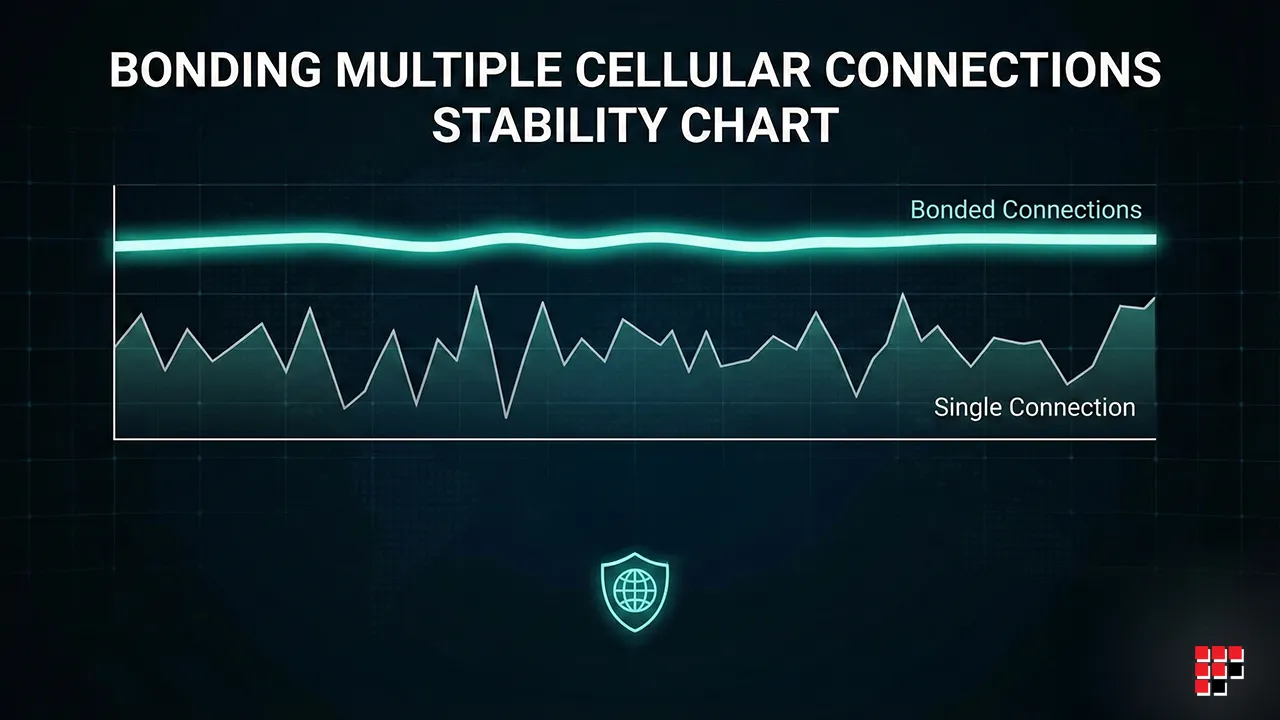
Chart showing how bonding multiple cellular connections delivers smoother and more stable performance than a single network line
2. Greater Flexibility in Challenging Locations
Organizations operating in areas with weak signal coverage can still maintain reliable internet when bonding multiple cellular connections. If one network is weak, the others compensate. This is ideal for mobile teams, IoT deployments, logistics, emergency services, and temporary work locations.
3. Enhanced Privacy and Security
Using several operators at once reduces the security risks associated with relying on a single provider. Bonded traffic is split at the packet level, making it significantly harder for attackers to intercept meaningful data. This strengthens confidentiality and protects business operations.
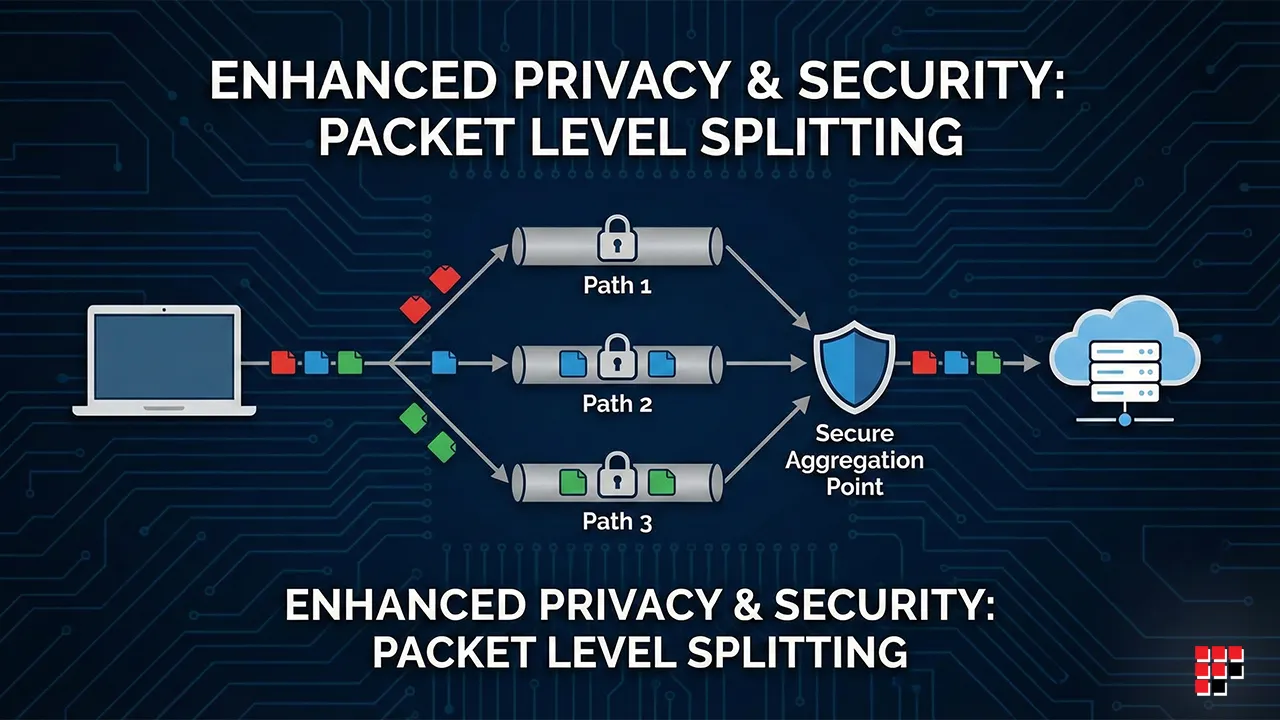
Visual showing encrypted packet paths that demonstrate how bonding multiple cellular connections enhances data protection
4. Improved Availability and Coverage
Bonding multiple cellular connections ensures wider coverage, especially in rural or infrastructure limited areas. Businesses achieve a unified and stronger connection that dynamically adapts to environmental and network variations.
5. Higher Speeds Through Aggregated Bandwidth
By combining the upload and download speeds of multiple networks, the total speed increases significantly. This allows:
- Faster cloud access
- Smoother VPN performance
- Better video conferencing
- High speed file transfers
6. Versatility Across Network Types
Bonding is not limited to one technology. Companies can merge 4G, LTE, 5G, and other compatible connections. This multi tech approach ensures the best available performance with minimal restrictions.
7. Business Continuity for Critical Operations
Bonding multiple cellular connections protects organizations from downtime that would normally stop operations. This is essential for retail, banking, logistics, healthcare, and any business requiring continuous uptime.
How comBOX Helps
The team at comBOX Networks has extensive experience in deploying bonded connectivity using multiple cellular operators across various industries. Their technology uses packet level distribution, intelligent routing, and transparent failover to ensure maximum performance.
Bonding multiple cellular connections is one of the most effective ways for companies to improve uptime, increase speed, strengthen security, and achieve stable connectivity in any environment. For businesses aiming to eliminate downtime and ensure peak performance, multi cellular bonding is a strategic investment that delivers immediate results.
Feel free to contact us for a free consultation and we will be happy to assist your business
FAQ
Can bonding multiple cellular connections work even if each SIM card is from a different country or region?
Yes. Bonding does not require the SIM cards to belong to the same country or provider. As long as each SIM provides an active data connection, they can be combined into the bonded tunnel. This is especially valuable for cross-border logistics, maritime vessels, and vehicles moving between coverage zones.
How does bonding multiple cellular connections improve real-world stability?
Bonding multiple cellular connections gives businesses a far more stable connection by distributing traffic across multiple operators. If one network drops or becomes congested, the others maintain service, ensuring uninterrupted connectivity for cloud apps, VPN, VoIP, and remote operations.
Can bonding multiple cellular connections boost performance even when individual links are weak?
Yes. Even if each link performs poorly on its own, their combined bandwidth and redundancy offer significantly stronger performance. The system intelligently assigns more traffic to better-performing links in real time, resulting in smoother connectivity overall.
Does comBOX enhance the benefits of bonding multiple cellular connections?
Absolutely. comBOX uses packet-level distribution, advanced QoS, and smart failover to maximize the performance of bonded cellular links. This ensures higher speeds, stable VPN sessions, and predictable uptime even over mixed technologies like 4G, LTE, 5G, and satellite.
What happens if one of the bonded cellular networks becomes unstable?
When bonding multiple cellular connections, the bonding engine automatically detects instability and shifts packets away from the affected link. This prevents interruptions and keeps critical services online without manual intervention.
Can comBOX maintain a stable public IP while bonding multiple cellular connections?
Yes. comBOX assigns a virtual public IP that stays active across all connected networks. Even if one or more SIM cards drop, the public IP remains unchanged, keeping VPN tunnels, remote access, and cloud sessions fully stable.
Is bonding multiple cellular connections useful in areas with unpredictable coverage?
Yes. This is one of the biggest advantages. By combining multiple carriers, the weaknesses of one network are offset by the strengths of others. Businesses operating in rural, cross-border, maritime, or mobile environments benefit significantly from the combined coverage footprint.


