
Defining the Modern Cloud Ready Network
What exactly is a cloud ready network? In the rapidly evolving IT landscape, “the cloud” has become more than just a buzzword; it is the operational backbone of modern business. Whether you are a small startup or a global enterprise, you have likely adopted cloud computing in some form.
However, the key to unlocking the full potential of these remote services lies entirely in how you connect to them. The formula is simple: without a robust network, there is no cloud. To take it a step further, a poor network results in a frustrating, unproductive cloud experience.
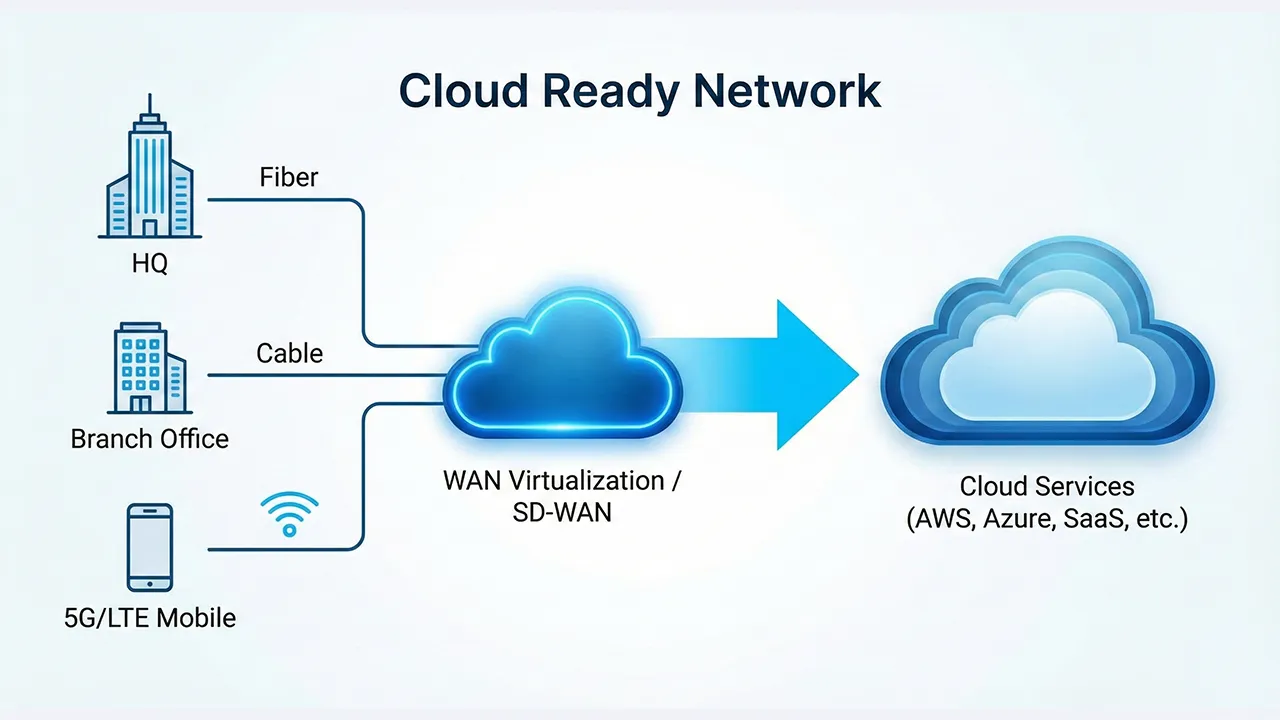
Therefore, a cloud ready network is defined as an intelligent network infrastructure specifically designed to ensure reliable, high-performance, and secure access to cloud-based applications and services.
The Trap of Legacy Infrastructure
Over the last decade, we have witnessed an explosion of cloud-native applications, driven by massive strides in server and storage virtualization. Today’s workforce is more mobile, agile, and eager for cloud adoption than ever before.
Unfortunately, most network infrastructures have failed to catch up. The reality is that many businesses still rely on traditional ISPs and rigid technologies like MPLS. These legacy solutions often come with exorbitant costs and long contract lock-ins, making the full migration of IT infrastructure to the cloud financially unfeasible for many.
To build a true cloud ready network, businesses must move away from single-carrier dependencies and embrace flexibility.

WAN Virtualization: The RAID of Networking
The definitive solution to enabling a cloud ready network for enterprise is WAN virtualization, often realized through advanced SD-WAN deployments.
Think of WAN virtualization for networking as the equivalent of what server virtualization did for computing. It introduces a layer of software intelligence that abstracts the physical hardware, allowing for unparalleled scalability, flexibility, and control.
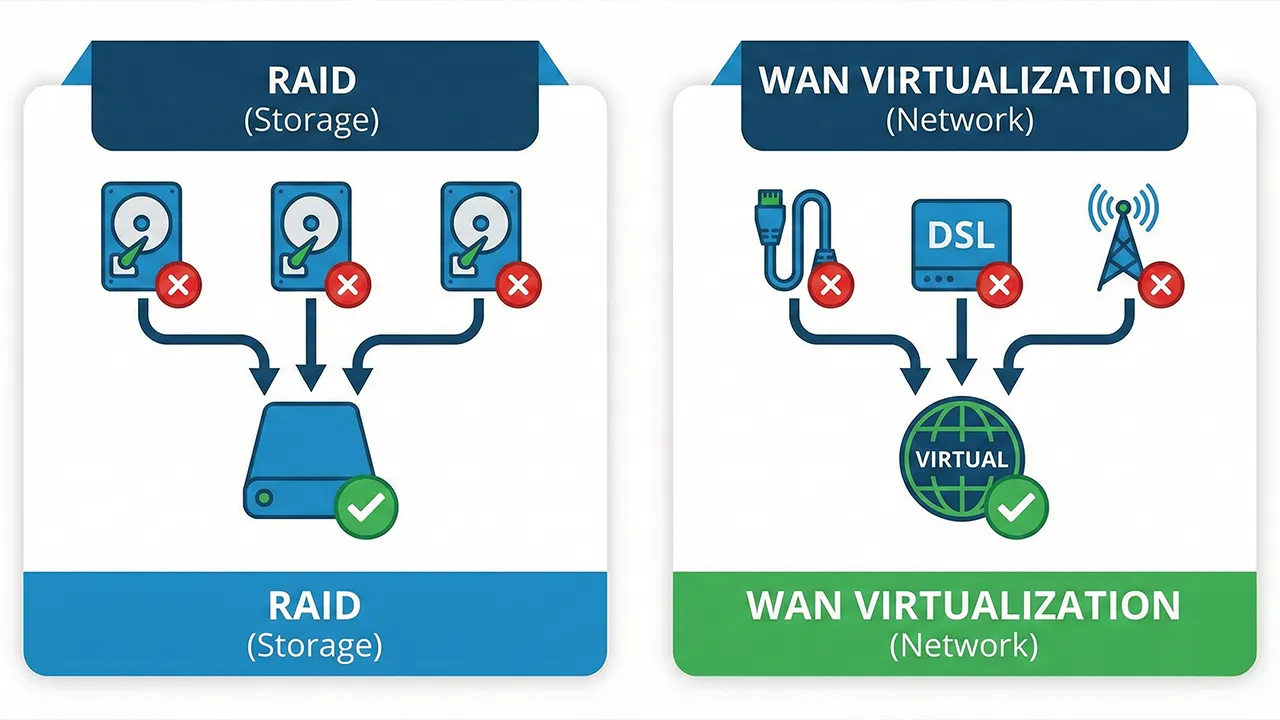
A perfect analogy for this technology is RAID (Redundant Array of Independent Disks). RAID revolutionized data storage by allowing IT professionals to combine multiple, inexpensive, and potentially unreliable hard drives into a single, highly reliable logical unit.
WAN virtualization applies this same logic to your internet connections. By leveraging [comBOX SD-WAN Solutions], you can combine various distinct transport mediums to create a unified, robust pipeline for your data.
How comBOX Optimizes Your Cloud Strategy
[comBOX services] employ cutting-edge WAN virtualization to architect the robust and cost-effective infrastructure required by global companies.
By deploying a cloud ready network via comBOX, businesses can experience unprecedented bandwidth capabilities while reducing their monthly Wide Area Network costs by up to 90%. This approach provides significantly higher reliability than traditional private WANs like Frame Relay or MPLS.
Just as RAID wraps a layer of intelligent software around hardware to secure data, comBOX wraps intelligence around your connectivity. It seamlessly aggregates diverse connections—such as DSL, Cable, Fiber, Metro Ethernet, 4G, 5G, and even satellite—into a single, unbreakable virtualized connection.

Achieving 99.99% Reliability on a Budget
The secret sauce to the comBOX approach lies in its proprietary algorithms. This technology executes end-to-end traffic engineering decisions in real-time.
In a cloud ready network powered by comBOX, data packets are intelligently distributed across multiple routes based on current traffic conditions, latency, jitter, and packet loss. This dynamic routing effectively neutralizes the transient instabilities inherent in individual ISP connections.
The result is aggregated throughput that can support even the most demanding real-time cloud applications, such as VoIP and video conferencing, without the price tag of a dedicated leased line.
By adopting WAN virtualization, your business builds a cloud ready network that is simultaneously more reliable, faster, and vastly more affordable than the proprietary, single-vendor networks of the past.

FAQ
What is a cloud ready network and why does it matter?
A cloud ready network is an intelligent, high-performance infrastructure designed specifically to deliver reliable, secure, and efficient access to cloud applications. The blog emphasizes that without a robust network, businesses cannot unlock the productivity, mobility, or scalability benefits of cloud services. A weak network leads directly to a poor cloud experience.
Why do legacy ISP connections and MPLS architectures struggle to support modern cloud usage?
Traditional networks were not built for today’s cloud-heavy workloads. MPLS and single-carrier ISP connections are rigid, expensive, and often locked into long-term contracts. They limit agility and make full cloud adoption difficult or financially unrealistic. The blog explains that businesses must move away from single-provider dependencies to achieve true cloud readiness.
How does WAN virtualization transform cloud connectivity?
WAN virtualization adds a software-defined intelligence layer that abstracts the physical connections underneath. The blog compares it to RAID for networking: multiple inexpensive and even unreliable connections are combined into one highly reliable virtual network. This enables flexibility, scalability, and resilience that traditional WANs cannot provide.
How does comBOX use WAN virtualization to optimize cloud performance?
comBOX aggregates diverse connections, DSL, Cable, Fiber, Metro Ethernet, 4G, 5G, and satellite, into a single virtualized pipeline. This architecture multiplies bandwidth, increases stability, and significantly reduces WAN costs. According to the blog, companies can cut monthly WAN expenses by up to 90% while gaining higher reliability than legacy private WAN services.
How does comBOX achieve 99.99% reliability without expensive leased lines?
The blog describes that comBOX uses proprietary algorithms that perform real-time traffic engineering. The system continuously evaluates latency, jitter, packet loss and congestion, then dynamically routes packets across the best available paths. This neutralizes the weaknesses of individual ISP connections and maintains consistent performance for even the most demanding cloud applications.
What cloud applications benefit most from a cloud ready network?
Real-time services such as VoIP, video conferencing, SaaS platforms, remote desktops, and mission-critical business systems depend on low latency and high reliability. The blog emphasizes that aggregated throughput and dynamic routing enable these applications to operate smoothly without the cost of dedicated enterprise circuits.


