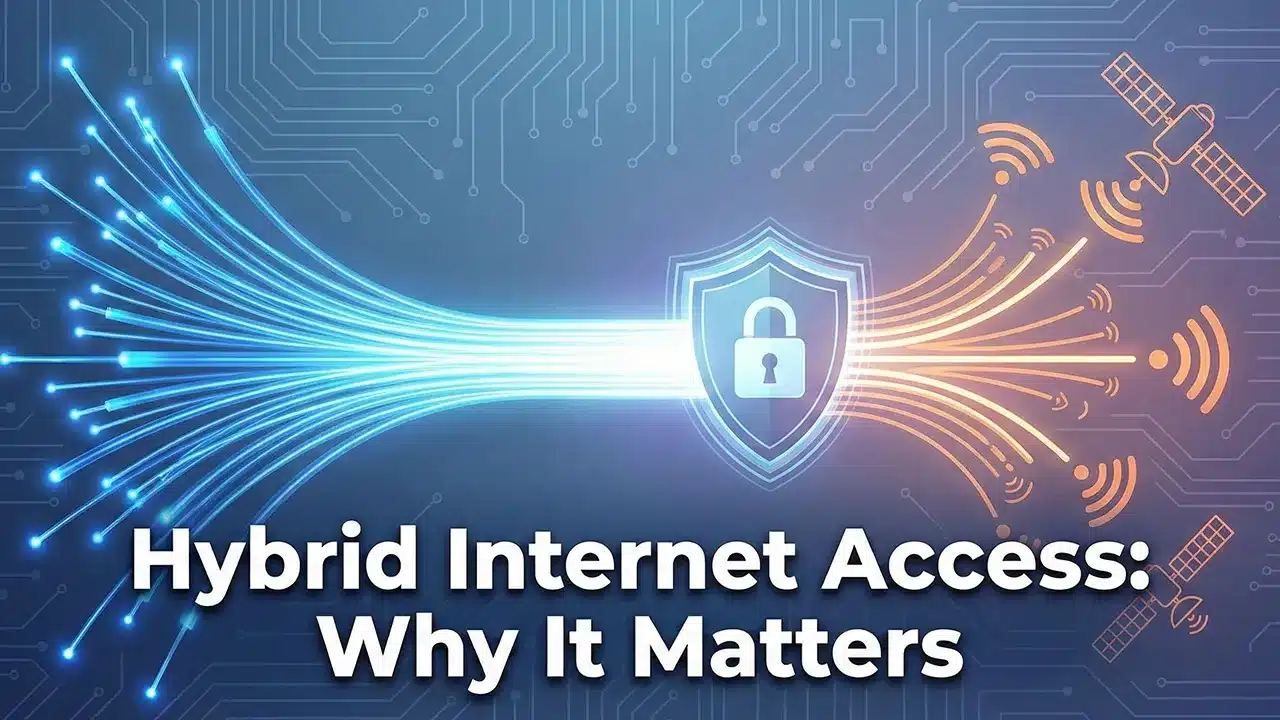
Hybrid Internet Access: Why It Matters
Hybrid Internet Access is becoming the top choice for organizations that cannot tolerate interruptions in performance or uptime. As companies rely more heavily on cloud systems, remote access, SaaS tools and real time communication, a traditional single connection simply cannot meet modern operational demands.
Internet interruptions lead to productivity loss, revenue loss, customer service delays and operational risk. Hybrid Internet Access solves this by merging wired and wireless links into one resilient connectivity architecture.
Understanding the Hybrid Internet Access Model
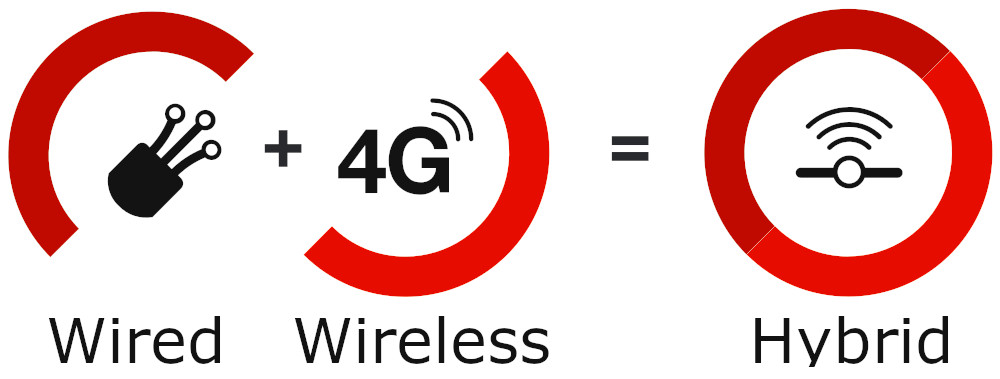
Hybrid Internet Access is a network configuration that uses multiple access technologies at the same time. Instead of selecting only a wired or only a wireless service, a Hybrid design blends both technologies into a unified, high performance connection.
This setup improves throughput, stability and overall link reliability. Even when one source experiences congestion or downtime, the other available path compensates instantly.
How Hybrid Internet Access Works Internally
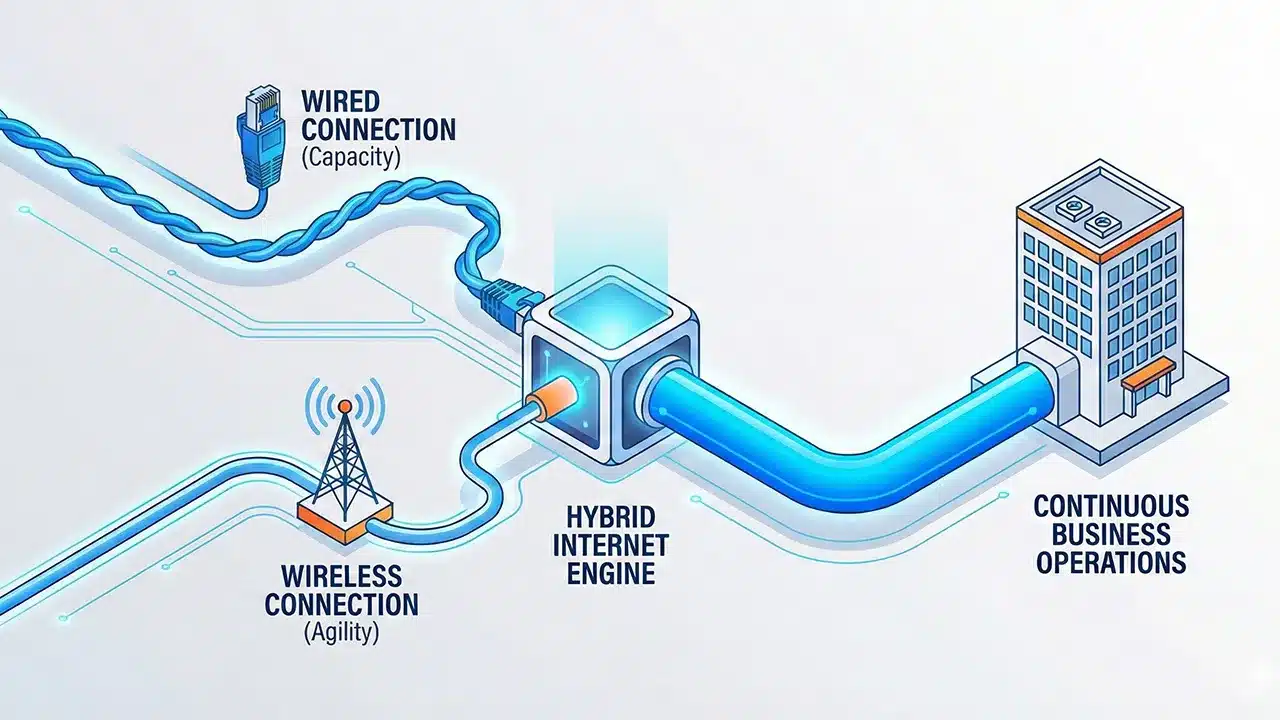
Hybrid Internet Access operates by routing traffic through different network paths. Wired lines deliver consistency and capacity, while wireless provides agility and instant backup. This blend drastically reduces the risk of total link failure.
How Hybrid Internet Access Eliminates Downtime
One of the most important advantages of Hybrid Internet Access is its extremely low failure rate. When multiple connection types work simultaneously, the chances of losing connectivity approach zero.
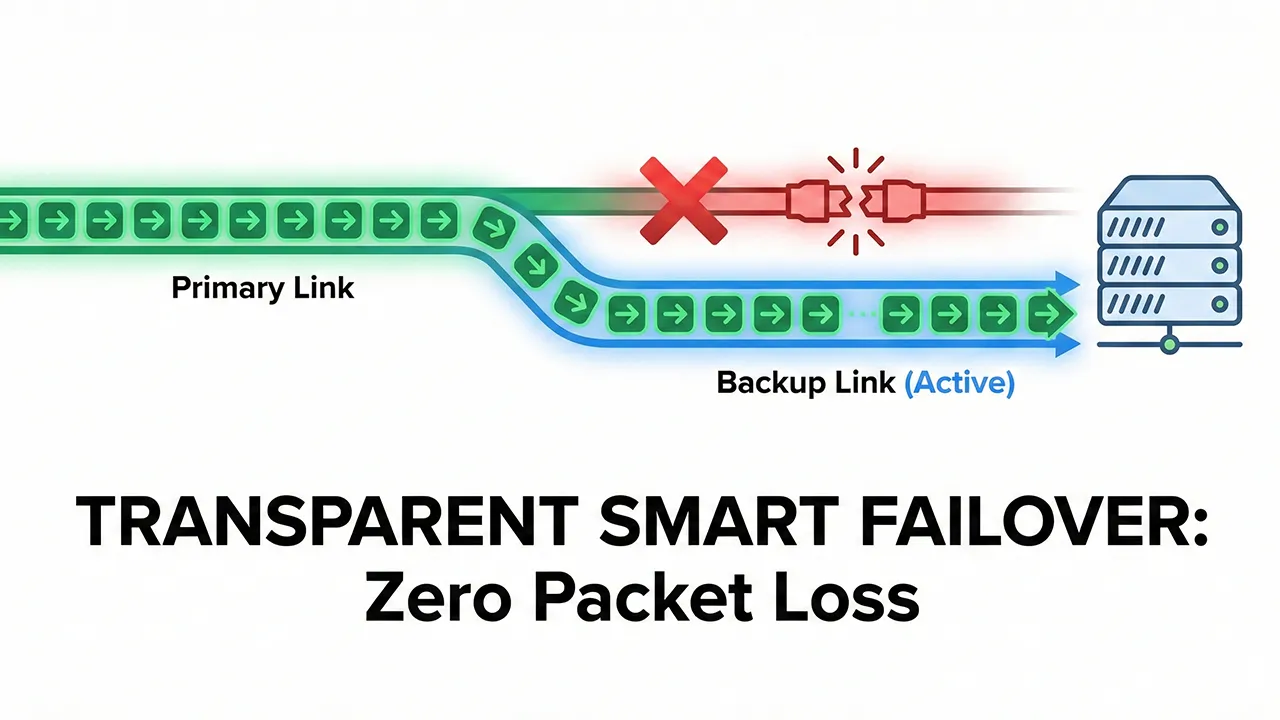
This is achieved through intelligent performance monitoring. The system continuously evaluates link latency, jitter and packet loss. If any wired link becomes unstable, data flows through the wireless backup instantly.
Transparent Smart Failover Technology
This intelligent mechanism ensures that end users experience no session drops, no disconnects and no interruptions. Productivity continues even while the system transitions from one technology to another.
Key Technologies That Make Hybrid Internet Access Reliable
Hybrid Internet Access delivers exceptional reliability because several advanced mechanisms work together to keep performance stable and uninterrupted. The system continuously evaluates every available connection in real time, measuring latency, loss and overall link quality. Based on these live analytics, traffic is routed through the most efficient path at any given moment.
Intelligent distribution ensures that mission-critical applications always receive optimal handling, while less sensitive traffic uses alternative routes. This prevents congestion and maintains predictable speeds. The same smart logic applies when selecting paths across wired and wireless technologies, allowing the system to adapt instantly whenever conditions change. Demand is spread intelligently across all available links, reducing overload and maintaining consistent throughput even during peak usage.
Hybrid Internet Access for Small Businesses
Small businesses often depend on limited connectivity options. Many rely on DSL or basic commercial connections that cannot support continuous operations during peak load times or technology failures.
By adopting Hybrid Internet Access, small businesses gain:
- Consistent uptime during peak hours
- Protection from outages
- Better performance for cloud and communications tools
- Reduced operational risk
Smart Utilization of Wired and Wireless Links
A small business can combine multiple DSL connections to increase performance while keeping wireless networks as an emergency bridge. This prevents unnecessary cellular data charges during normal usage but ensures instant protection during downtime.

Enterprise Level Benefits of Hybrid Internet Access
Larger organizations depend on real time communication, cloud operations and internal applications. Hybrid Internet Access dramatically reduces the risks associated with network interruptions.
Enterprise teams benefit from:
- Higher bandwidth availability
- Stronger performance for VPN applications
- Better reliability across branches
- Improved resilience during outages
- Stable communications for remote teams
Support for Mission Critical Applications
Hybrid Internet Access ensures continuous operation for systems that cannot afford a single second of downtime. Tools like VoIP, video conferencing, remote desktops, ERP platforms and CRM systems function with full stability.
Why comBOX Makes Hybrid Internet Access Truly Unbreakable
The team at comBOX specializes in high reliability network architectures, and Hybrid Internet Access is one of the strongest solutions available for organizations demanding maximum uptime.
comBOX engineers apply extensive experience to create systems that deliver smooth performance with minimal complexity. Businesses receive guidance on best practices, recommended technologies and deployment strategies.
Expertise in Wired and Wireless Integration
comBOX solutions can incorporate any type of wired and wireless technology to create a stable Hybrid Internet Access environment. This includes commercial circuits, high Transparent Smart Failover
comBOX implements advanced failure protection, ensuring that if one path fails, the system instantly switches to a live alternative without interruptions.
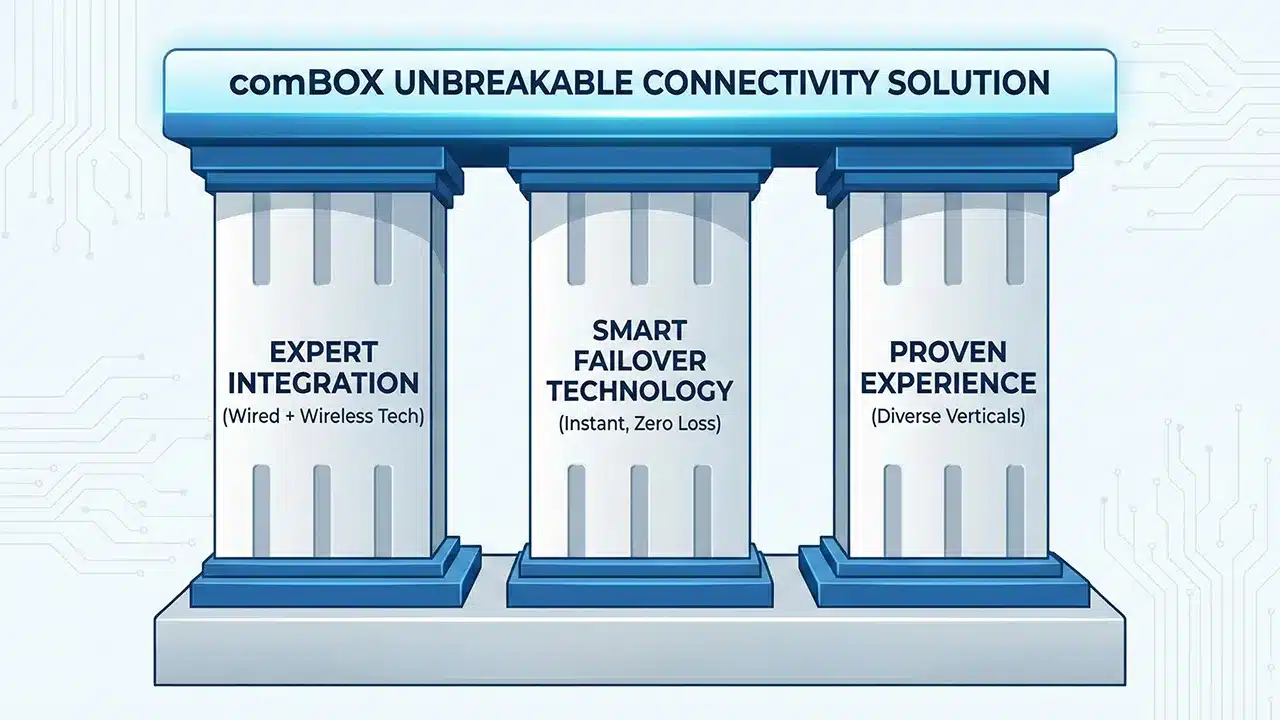
Proven Experience in Diverse Use Cases
comBOX has supported numerous industry verticals with high availability connectivity, assisting IT teams, CTOs and business owners in building stable platforms.
FAQ
What is Hybrid Internet Access?
Hybrid Internet Access is a connectivity model that simultaneously uses multiple access technologies, combining wired (e.g. DSL, VDSL, fiber) and wireless (e.g. 4G/5G, cellular, SatCom) links, into a single unified Internet connection. This hybrid setup blends the consistency and capacity of wired networks with the agility and backup resilience of wireless.
How does Hybrid Internet Access eliminate downtime for businesses?
The system continuously monitors each link’s performance (latency, jitter, packet loss). If a wired link degrades or fails, Hybrid Internet Access seamlessly fails over to available wireless links, ensuring sessions remain live, applications stay connected, and users experience no interruption.
What benefits does Hybrid Internet Access bring to small businesses?
For small businesses, often reliant on basic commercial connections, Hybrid Internet Access offers: increased reliability during peak hours, protection against outages, improved performance for cloud-based tools and communications, and reduced operational risk. It allows bonding of existing DSL/VDSL links with wireless backup to avoid costly dedicated lines.
What advantages does Hybrid Internet Access provide for larger enterprises and mission-critical applications?
Enterprises benefit via higher aggregated bandwidth, enhanced VPN and remote connectivity performance, dependable branch-to-branch communication, resilience during outages, and stable connectivity for remote teams. It supports time-sensitive and critical workloads, such as VoIP, video conferencing, ERP/CRM systems, with high availability and minimal disruption.
In what ways is Hybrid Internet Access more cost-efficient than traditional dedicated leased lines?
Hybrid Internet Access allows companies to avoid the high costs of professional leased-line circuits by combining existing wired broadband and wireless links, yet achieving performance, reliability, and uptime close to leased-line standards. Implementation is faster and more flexible, with lower upfront and recurring costs.
What makes comBOX’s Hybrid Internet Access implementation “truly unbreakable”?
comBOX’s extensive experience in integrating wired and wireless technologies ensures optimized architectures tailored to customer needs. Their hybrid solution uses intelligent link-monitoring and failover, dynamic traffic distribution, and best-practice deployment, guaranteeing seamless performance even when some links degrade.


