
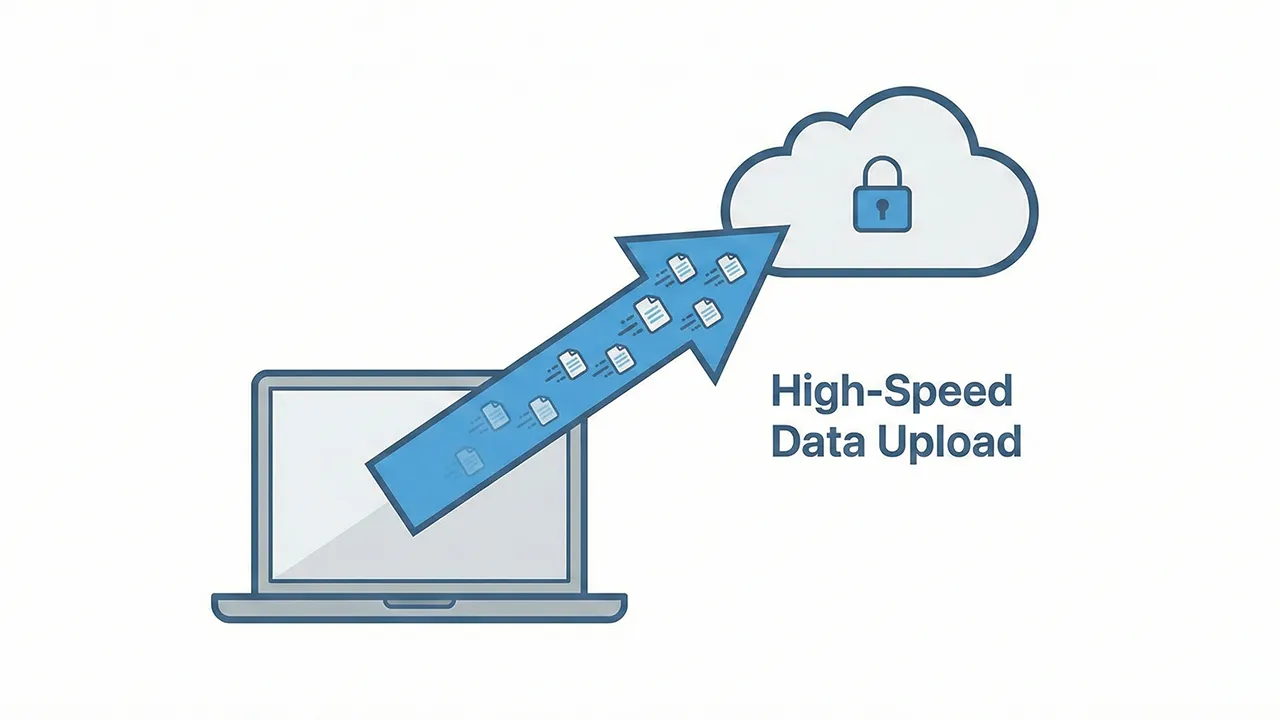
Is your business suffering from sluggish cloud performance? If you are looking for a reliable way to increase upload speed, you are not alone.
In the modern digital landscape, upload speed, the rate at which you send data to the Internet, is the backbone of enterprise efficiency. Low upstream bandwidth is often the hidden culprit behind poor performance in CRM systems, VoIP lags, and slow cloud backups. For modern enterprises, the inability to reliably integrate these applications can halt productivity and stifle growth.
Why Upload Speed Determines Business Success
The use of modern cloud applications is essential for increasing the competitiveness of businesses. Whether you are using comBOX services for remote desktop applications or heavy file transfers, the demand on your upstream data is immense.
High upload bandwidth provides significant organizational, commercial, and financial benefits. It increases staff productivity by automating business processes and ensuring real-time data synchronization. However, when your connection lags, your business lags.
The Reality of VDSL and Fiber Coverage
Unfortunately, the average upstream capability in many regions, including Greece, remains insufficient for current corporate needs. While download speeds have improved, VDSL and FTTH technologies often have low population coverage or offer asymmetrical speeds that favor downloading over uploading.
According to state-of-the-Internet reports from major data exchange companies like Akamai, only a small percentage of connections exceed 10 Mbps in bandwidth, with the vast majority hovering between 4 and 10 Mbps. This creates a bottleneck that makes it difficult to increase upload speed effectively using a single standard line.
Why Leased Lines Are Often Not the Answer
When facing these bottlenecks, the traditional question arises: What are the options for a company that needs to integrate modern cloud applications with high throughput requirements?
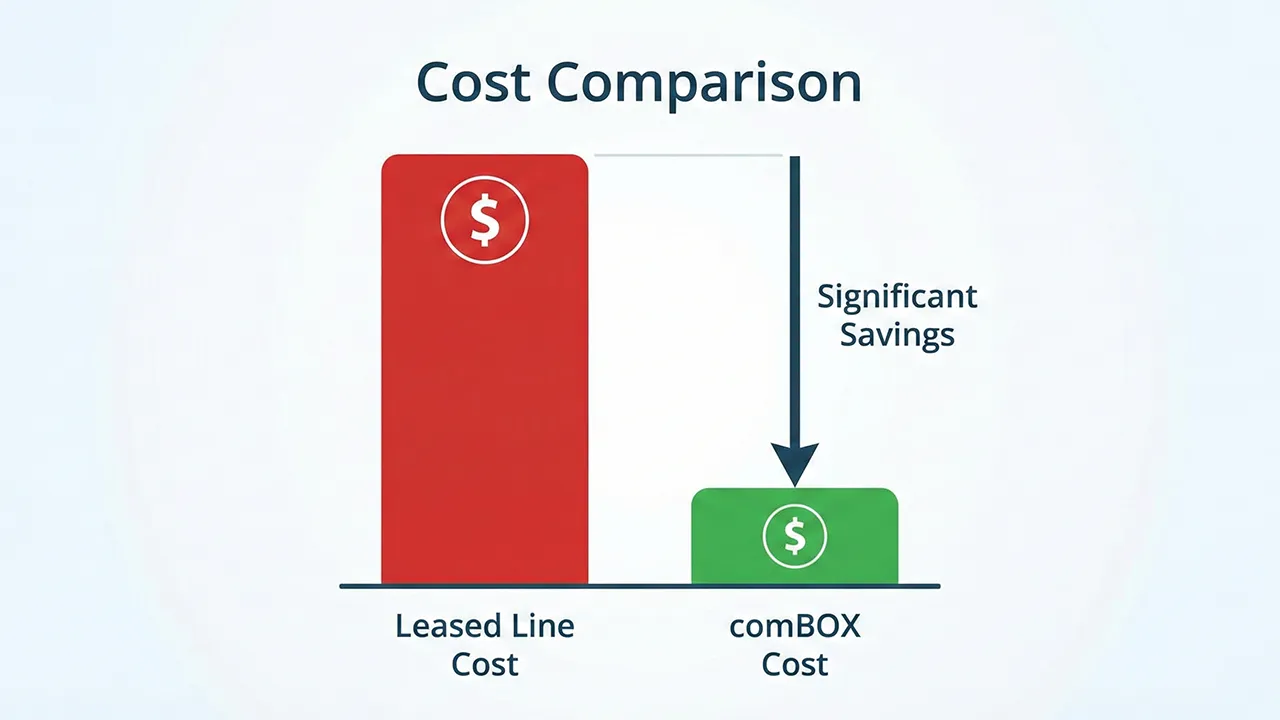
One standard option is to obtain a dedicated circuit from a single provider. However, this option is not always viable. It depends directly on the coverage of the fiber optics backbone of specific network providers. Furthermore, the cost for a dedicated circuit with symmetrical speed over 4Mbps can be prohibitively high, often exceeding the average telecommunications budget of a small to medium enterprise.
How comBOX Services Increase Upload Speed
This is where innovation bridges the gap. comBOX services have been developed specifically to offer an advantageous alternative to the problem of low upstream bandwidth.
Rather than relying on a single, expensive line, our technology allows you to unify multiple, low-cost Internet connections. By utilizing both the upload and download capacities of various lines simultaneously, you can create a single, robust pipe. This approach allows you to increase upload speed dramatically by summing the capacities of DSL, VDSL, 5G, or LTE connections.
Note: You do not need to wait for fiber to arrive in your area to get enterprise-grade speeds.
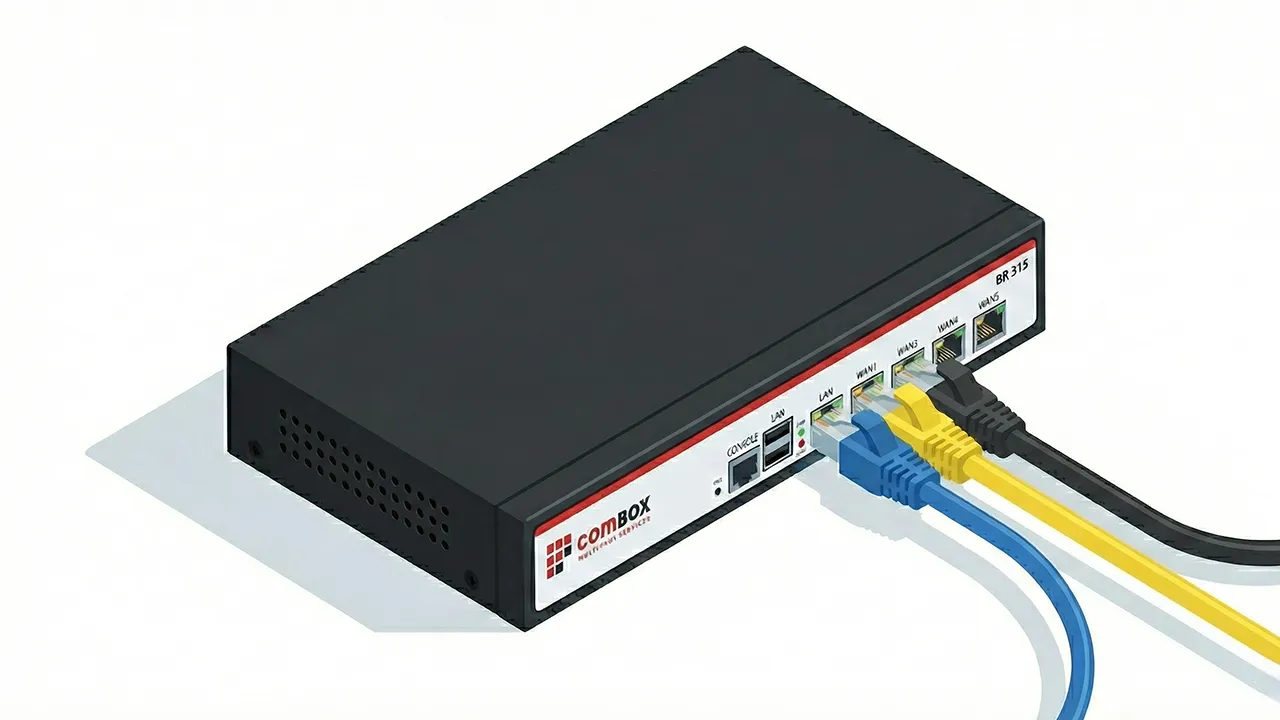
A multi port network unit showing how different cables plug in to support bonding internet connections
Reliability vs. Speed: You Need Both
Speed is nothing without stability. Even if a company is fortunate to be located in an area where VDSL is available, the level of reliability must be assessed. Practice has proved that standard consumer-grade connections do not provide guaranteed availability, and the available speed fluctuates frequently.
In conjunction with advanced risk distribution technologies, such as adaptive self-tuning and transparent failover, comBOX services bypass the instability of standard connections. We optimize the available bandwidth by integrating cutting-edge network optimization protocols. This ensures that when you take steps to increase upload speed, you are also securing 99.9% uptime.
Cost-Effective Alternatives for Enterprises
Budget is a primary concern for any IT manager. Our solution allows you to leverage cost-effective connections from different providers. By combining the strengths of different ISPs, you avoid vendor lock-in and the exorbitant installation fees of digging for fiber optics.
You can combine a standard OTE line with a 5G backup and a satellite link, creating a custom ecosystem that rivals the performance of expensive dedicated circuits at a fraction of the price.
Start Combining Connections Today
Before signing a long-term, expensive contract for the supply of a dedicated circuit, we invite you to try our solution.
You can increase upload speed immediately by combining multiple Internet connections of your choice—even from different providers. Create your own custom, high-speed virtual circuit and give your business the cloud performance it deserves.
Are you ready to boost your connectivity? Check out our network solutions or contact us today to see how much faster your business could be running.
FAQ
Why is upload speed so critical for modern business operations?
Upload speed is the foundation of cloud performance. The blog explains that upstream bandwidth directly affects CRM responsiveness, VoIP call quality, remote desktops, file transfers and real-time data synchronization. When upload speed is low, productivity drops because cloud applications cannot exchange information quickly enough.
Why do common technologies like VDSL and Fiber often fail to provide adequate upload speeds?
Many regions have limited VDSL or FTTH coverage, and even where available, these technologies often deliver asymmetrical speeds that prioritize downloads over uploads. Reports cited in the blog show most connections offer only 4–10 Mbps upstream, far below what modern cloud workloads require. This creates a bottleneck that cannot be resolved with a single line.
Why aren’t dedicated leased lines always a practical solution for increasing upload speed?
Leased lines depend on fiber backbone availability, which is often limited by geographic coverage. When available, symmetrical dedicated circuits with more than 4 Mbps upstream capacity are extremely expensive. For most small and medium enterprises, the monthly cost far exceeds typical telecom budgets, making leased lines impractical.
How do comBOX services help businesses increase upload speed without waiting for fiber?
The blog states that comBOX technology unifies multiple affordable connections, DSL, VDSL, 5G, LTE and others, into a single high-capacity virtual pipe. By combining the upload bandwidth of all links, businesses achieve dramatic upstream improvements without relying on a single premium circuit. This enables enterprise-grade upload speeds even in areas without fiber coverage.
Why is stability just as important as upload speed?
Consumer-grade connections frequently suffer from inconsistent performance and downtime. The blog highlights that comBOX solves this using adaptive self-tuning, transparent failover and advanced risk-distribution technologies. These mechanisms ensure the bonded link maintains both high speed and 99.9% uptime, preventing interruptions in business-critical applications.


