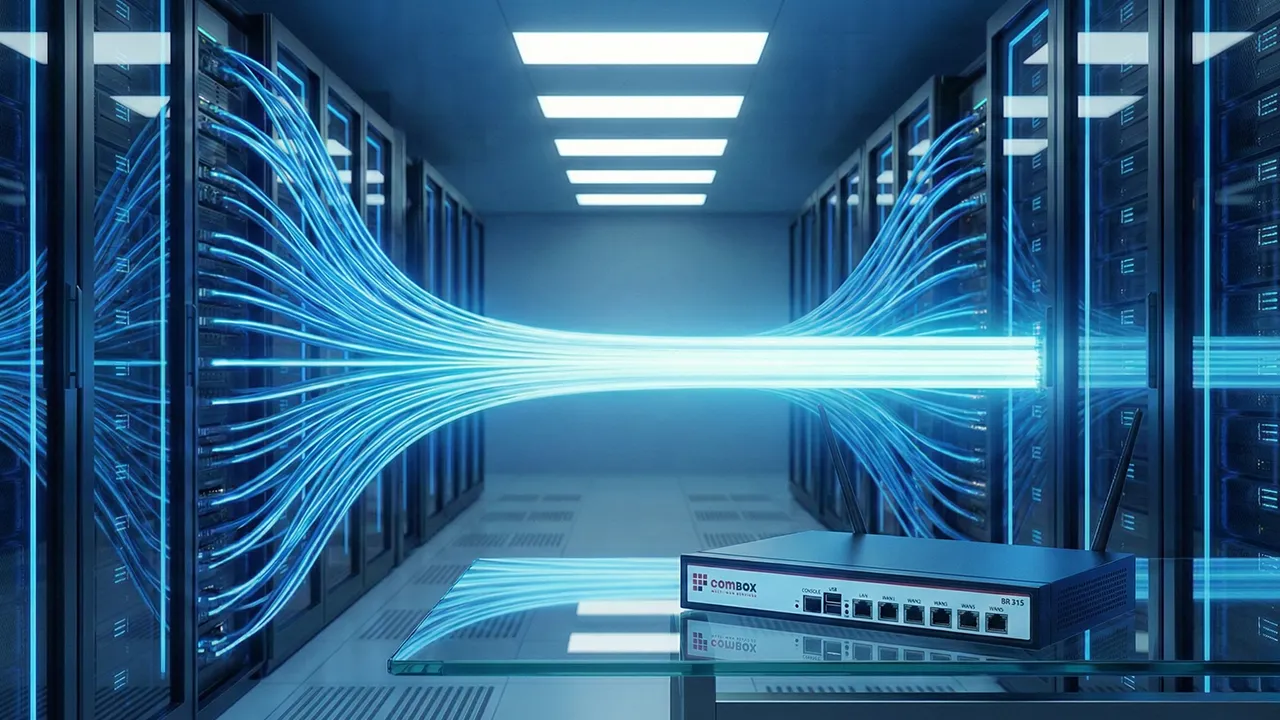
In the modern digital landscape, high-speed internet is not a luxury; it is the backbone of operations. For small to medium-sized businesses, the transition from legacy copper lines to fiber optics can be slow and expensive. This is where VDSL bonding comes into play. It acts as the perfect bridge, offering a way to multiply your speed and reliability without waiting for Fiber-To-The-Home (FTTH) infrastructure to reach your doorstep.
If you have struggled with “best effort” connections that drop during critical video calls, VDSL bonding is the technology that will transform your connectivity experience.
What is VDSL Technology?
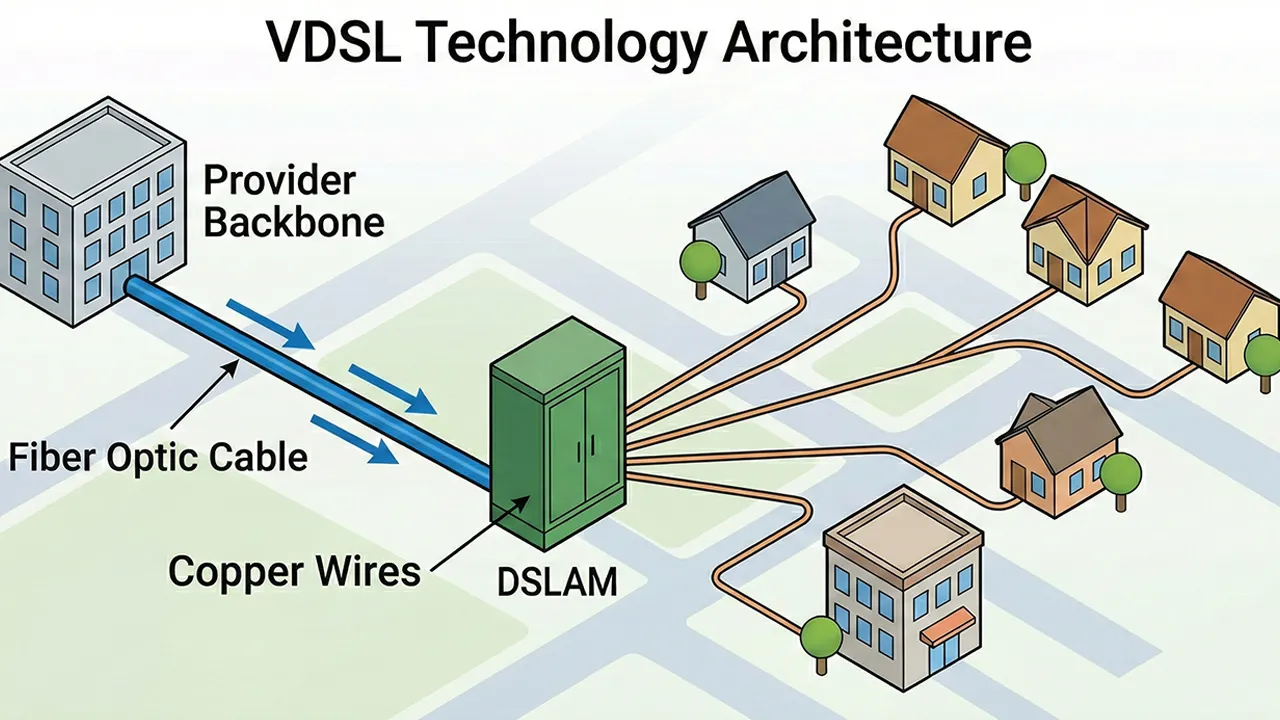
Before diving into the bonding architecture, it is essential to understand the base technology. VDSL (Very high-bitrate Digital Subscriber Line) is the fastest iteration of asymmetric DSL. It serves as the immediate precursor to pure fiber connections.
Because replacing millions of miles of copper cabling with optical fiber is a logistical and financial nightmare for providers, they have opted for an intermediate step. They expand their backbone networks by installing street cabinets (DSLAMs) closer to subscribers. This reduces the length of the copper wire, allowing for significantly higher speeds than older ADSL technology.
However, a single line often falls short for modern demands like HD video conferencing, large cloud backups, and connecting remote corporate branches.
The Hidden Reliability Problem
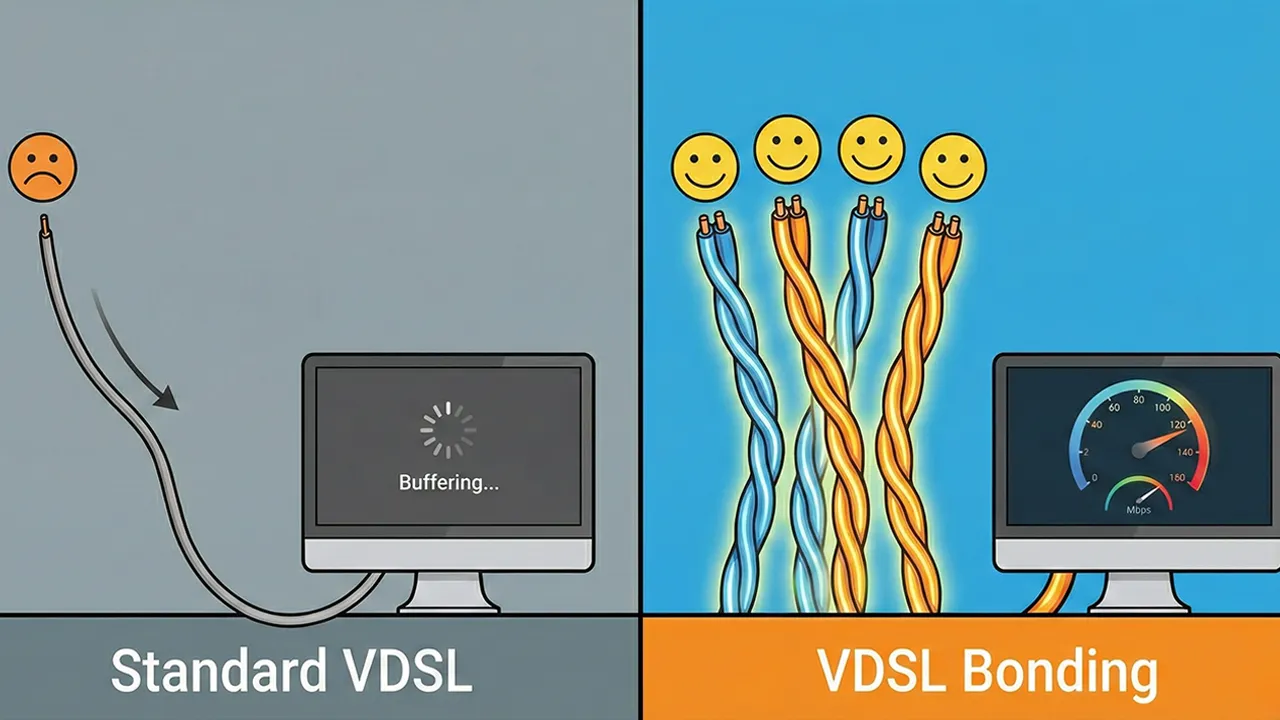
While VDSL offers decent nominal speeds (often marketed as 50 Mbps or 100 Mbps), it suffers from a critical flaw for businesses: reliability.
Most providers sell these connections on a “best effort” basis. This means there are no guarantees. Your VDSL bonding strategy becomes necessary because a single link can malfunction, fluctuate during peak hours, or disconnect entirely without warning.
For a business where downtime equals lost revenue, relying on a single consumer-grade VDSL line is a calculated risk that rarely pays off. In the past, the only alternative was purchasing expensive dedicated leased lines, even if the business was located within a VDSL-enabled area.
How comBOX VDSL Bonding Changes the Game
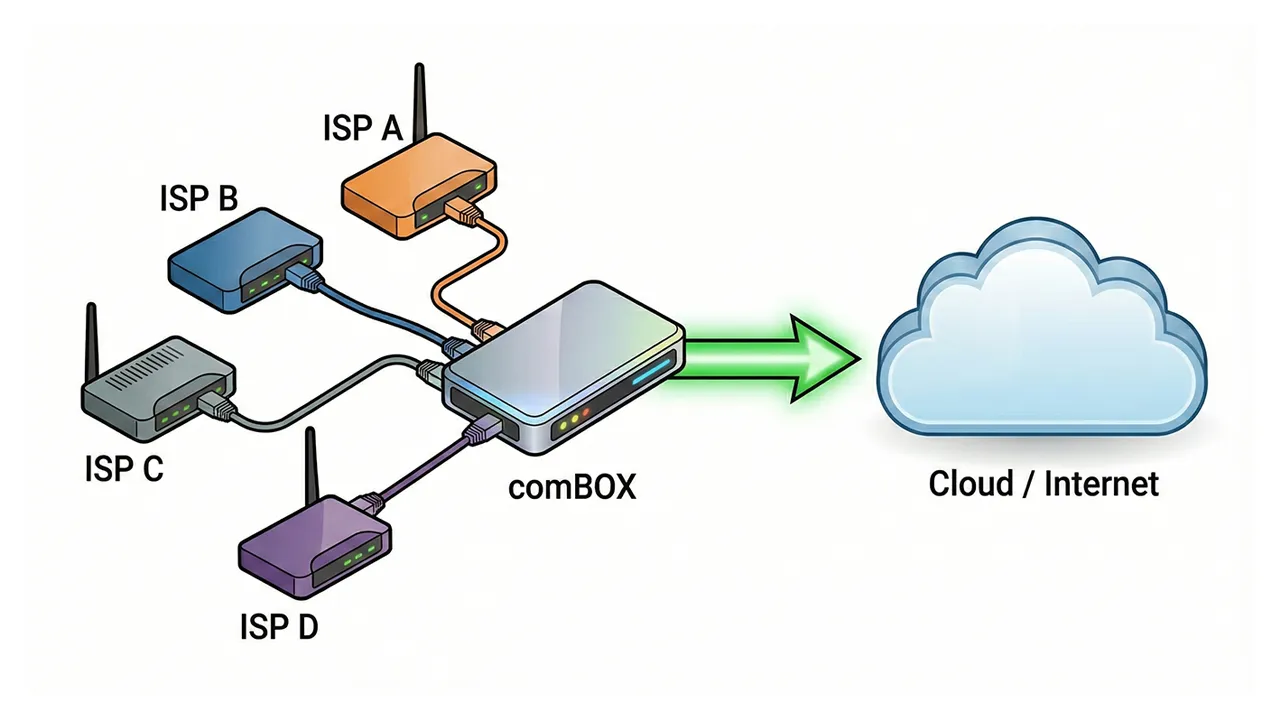
comBOX offers a permanent, professional answer to the instability of standard internet connections. By leveraging advanced traffic distribution algorithms, comBOX solutions utilize VDSL bonding to aggregate multiple connections into a single, robust pipe.
Unlike simple load balancing, which just distributes sessions, true VDSL bonding treats multiple lines as one unified connection. This multiplies the reliability of individual links. If one provider fails, the others keep your session alive without interruption. This allows you to leverage the backbone infrastructure of different providers simultaneously, creating an unbreakable internet connection.
Unlocking Ultrafast Speeds Cost-Effectively
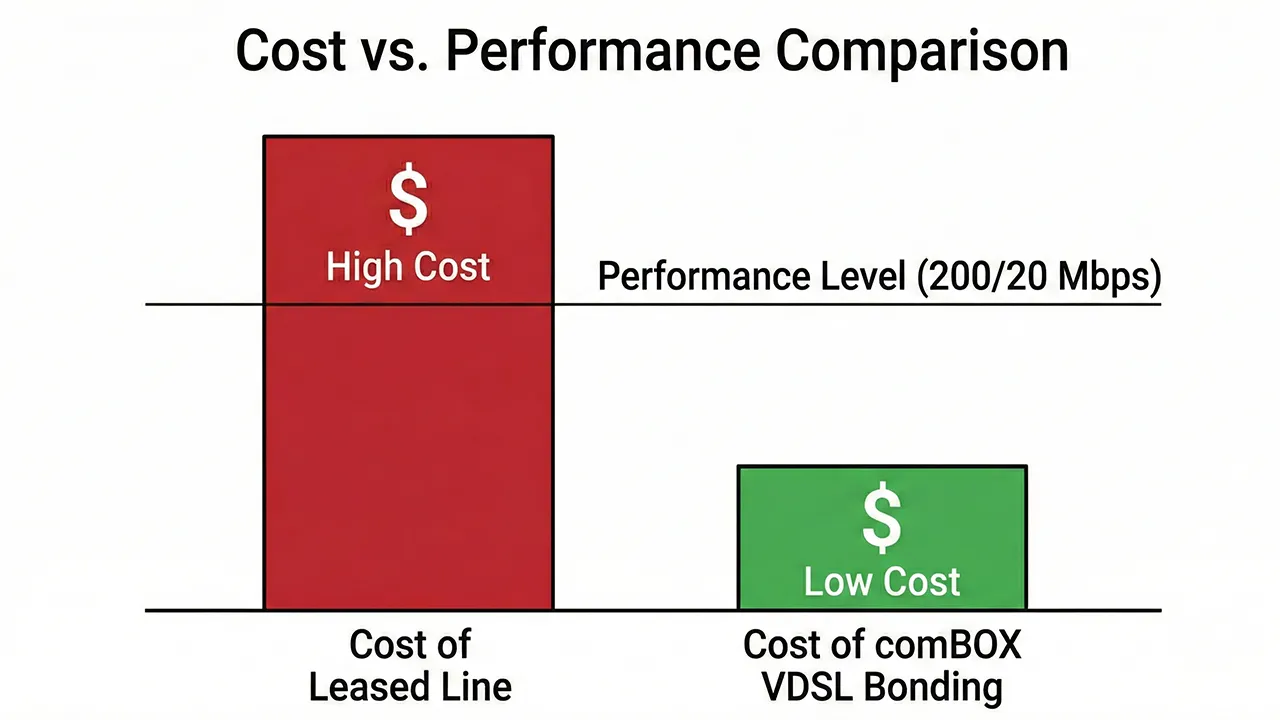
The financial benefits of this approach are undeniable. VDSL bonding provides asymmetric speeds that rival traditional leased lines but at a fraction of the operational cost.
Consider this real-world scenario:
- The Goal: You need 200 Mbps download speed and 20 Mbps upload speed.
- The Old Way: You lease a symmetrical fiber line. The cost is astronomical, and installation takes months.
- The comBOX Way: You utilize VDSL bonding to combine four standard 50/5 Mbps VDSL links.
The result is a single virtual connection with an overall speed of 200/20 Mbps. The cost of this implementation is roughly one-quarter of the cost of a comparable symmetrical leased line. Furthermore, you are not dependent on the proper functioning of a single provider’s network.
What If VDSL Isn’t Available Yet?
One of the most powerful features of the comBOX ecosystem is its flexibility. If the high-speed VDSL network has not yet reached your specific area, you are not out of luck.
You can achieve near-VDSL speeds by applying the same bonding principles to multiple ADSL connections. This saves you from signing distinct long-term contracts for expensive dedicated lines. More importantly, this setup is future-proof. As soon as VDSL becomes available in your area, you can instantly upgrade your bandwidth by simply substituting the ADSL lines for VDSL ones within your comBOX bonding setup.
Secure Your Connectivity Today
Don’t let “best effort” promises hold your business back. By adopting VDSL bonding, you gain the speed, redundancy, and peace of mind required to compete in a fast-paced market. It is the intelligent alternative to expensive fiber, putting you in control of your internet infrastructure.
FAQ
Why is VDSL bonding becoming essential for small and medium-sized businesses?
Because many regions still lack full fiber coverage, businesses are often stuck with aging copper lines that cannot keep up with modern cloud and communication demands. The blog highlights that VDSL bonding acts as a powerful bridge between legacy infrastructure and FTTH, multiplying speed and reliability without waiting for fiber rollout.
What problem does a single VDSL line create for business environments?
Although VDSL offers decent nominal speeds, providers sell it on a “best effort” basis with no guarantees. A single VDSL line can fluctuate, degrade during peak hours or drop entirely. For businesses using video conferencing, cloud backups or remote branches, this instability translates directly into downtime and lost productivity.
How does comBOX VDSL bonding improve reliability compared to traditional load balancing?
The blog explains that load balancing only distributes sessions, while comBOX VDSL bonding aggregates multiple connections into one unified pipe. If one line goes down, the others continue carrying traffic seamlessly. By leveraging multiple providers simultaneously, businesses avoid the weaknesses of any single ISP and achieve uninterrupted connectivity.
How does VDSL bonding help businesses achieve ultra-fast speeds cost-effectively?
VDSL bonding allows organizations to combine the bandwidth of several standard VDSL lines to reach high aggregate speeds. For example, four 50/5 Mbps lines can create a 200/20 Mbps virtual circuit. The blog states this approach costs roughly one-quarter of a comparable leased line while avoiding long installation delays and provider dependency.
What options exist for businesses in areas where VDSL is not yet available?
The comBOX ecosystem supports bonding of multiple ADSL lines as a temporary but effective alternative. This setup provides higher combined speeds without expensive long-term circuit contracts. Once VDSL becomes available, businesses can simply replace ADSL lines within the same bonding architecture and upgrade instantly.
Why is VDSL bonding a strategic alternative to leased lines?
Leased lines offer guaranteed performance but are extremely costly and heavily dependent on specific fiber backbone availability. The blog shows that VDSL bonding can deliver comparable speeds and superior resilience, at a fraction of the cost, while reducing reliance on a single telecom provider.


