
Does your business suffer from unpredictable internet performance? You are not alone. Most public IP connections, such as ADSL, VDSL, or Cable, come with inherent stability issues. These fluctuations can become a serious bottleneck for corporate networks running critical applications.
The solution seems obvious: add more lines. However, without intelligent bandwidth aggregation, simply adding connections often leads to frustration rather than freedom.

To truly fix connectivity issues, we must look beyond simple redundancy and understand why intelligent bandwidth aggregation is the superior choice for modern enterprises.
The Problem with Public IP Connections
In a corporate environment, relying on a single ISP link is a gamble. Even high-speed connections face jitter, latency, and packet loss. When these issues occur randomly, your VoIP calls drop, and cloud applications stall.
While businesses often turn to comBOX solutions to aggregate lines, it is vital to understand that not all aggregation is created equal. If you combine bad lines without intelligence, you often just get a “bigger” bad line.
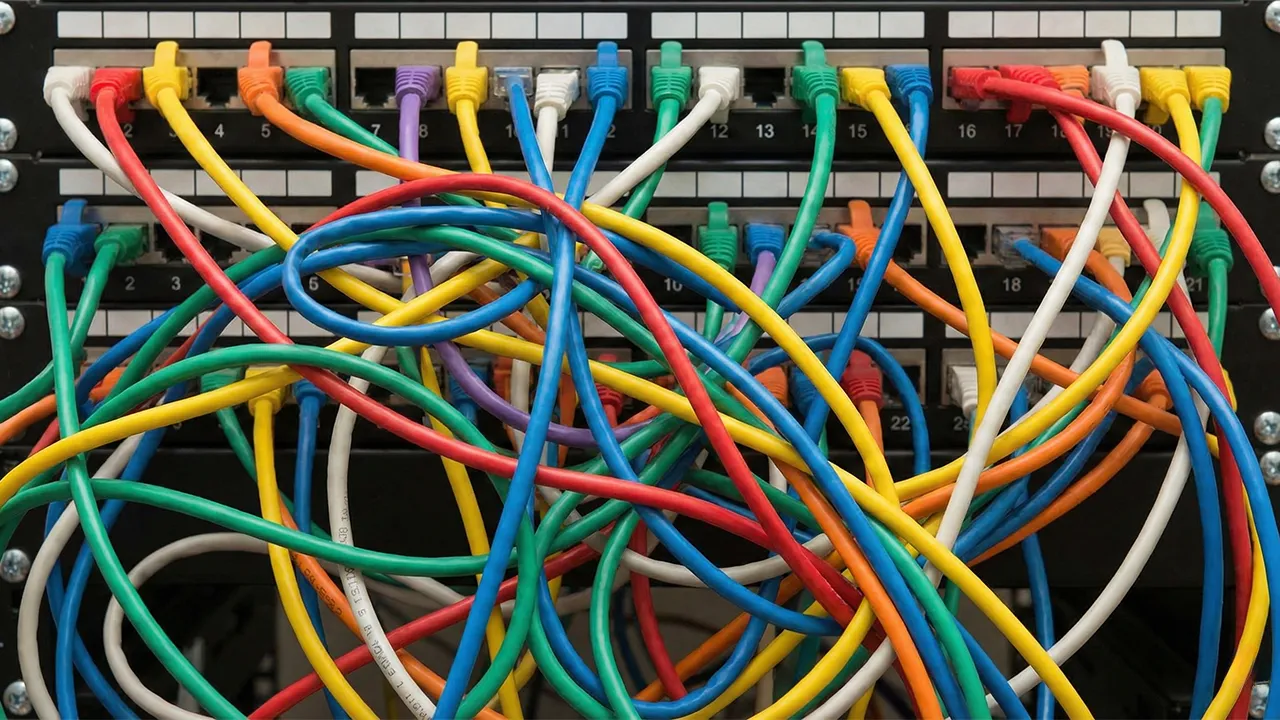
Why Traditional Load Balancing Fails
Many IT managers initially try “session load balancing.” This traditional method distributes user sessions across available links. While it sounds effective, it has a major inherent flaw.
If just one of your connections experiences high packet loss or latency, the load balancer may still route a critical session through that unstable link. The result? The user notices immediately. Their application stops working properly because the “dumb” balancer didn’t recognize the link was degrading in real-time.
Intelligent bandwidth aggregation solves this by actively monitoring the health of every link, millisecond by millisecond, rather than just blindly distributing sessions.
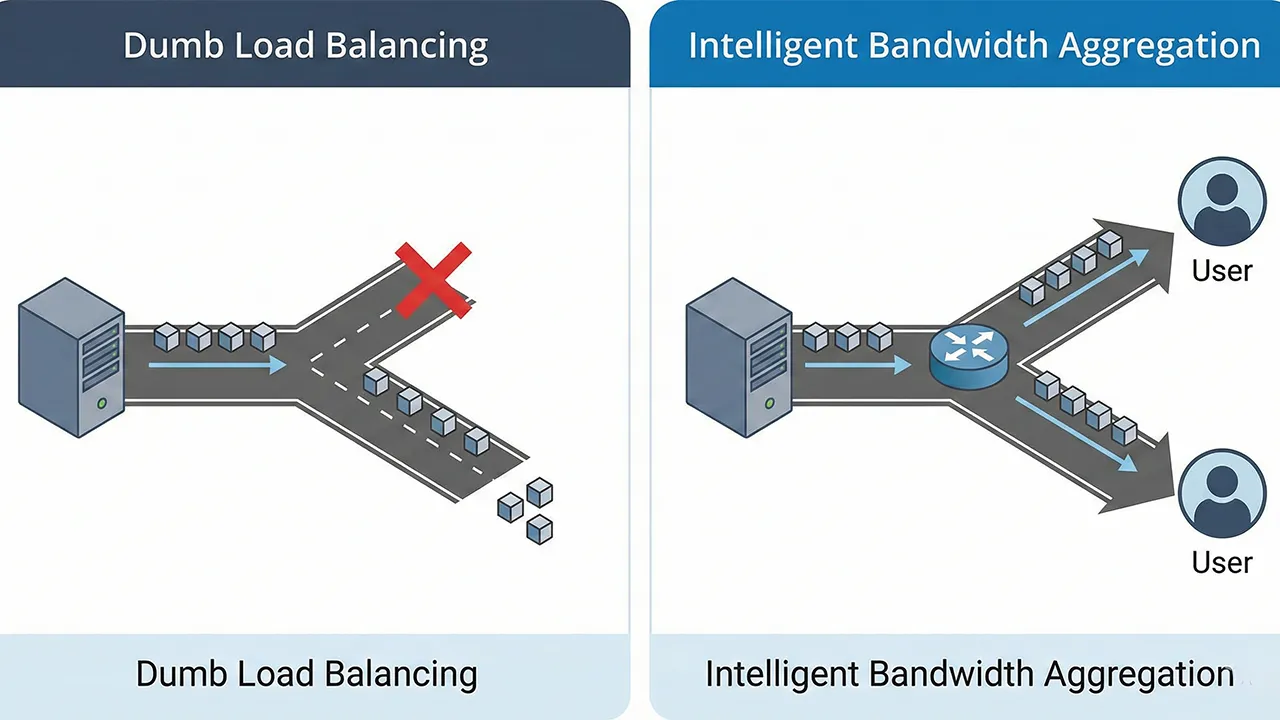
The Hidden Flaw in Basic Packet-Level Bonding
So, what happens if you upgrade to standard packet-level balancing? This technique splits a single session across multiple connections.
Logic suggests this should fix the problem. However, the truth is more complex. If the solution does not implement real-time WAN monitoring, the performance of your bonded link will only be as good as your worst connection.
Without intelligent bandwidth aggregation, the aggregate link inherits the instability of the individual lines. If one VDSL line has high jitter, the entire bonded pipe suffers, resulting in poor quality of experience (QoE) for end-users.
How Intelligent Bandwidth Aggregation Works
This is where true innovation comes in. A smart approach, like the one found in comBOX services, utilizes advanced algorithms to perform real-time traffic engineering.
Intelligent bandwidth aggregation doesn’t just bond lines; it manages them. It detects packet loss and latency instantly. If a line becomes unstable, the system automatically routes packets away from the trouble spot or applies error correction protocols to compensate.
By using intelligent bandwidth aggregation, businesses can utilize low-cost, unstable public internet connections to create a virtual link that rivals expensive dedicated circuits in stability.

Real-Time WAN Optimization: The Game Changer
The secret sauce to intelligent bandwidth aggregation is WAN optimization. This involves techniques that buffer against jitter and recover lost packets before the user even realizes there was a problem.
For a corporate network, this means:
- Crystal clear VoIP calls.
- Seamless access to Cloud Services.
- Uninterrupted video conferencing.
If your solution lacks these optimization techniques, you are merely bonding bandwidth, not optimizing it. You need a system that makes intelligent decisions on the fly to expose only the “clean” bandwidth to your applications.
Choosing the Right Solution
If your company relies on variable internet connections, you must ask the right questions. Don’t just ask for bonding; ask for intelligence.
Ensure your vendor provides intelligent bandwidth aggregation that actively manages performance and stability issues. By choosing a solution with built-in WAN optimization, you secure a robust, business-grade connection regardless of the underlying ISPs.
Ready to stabilize your network? Explore our comBOX Technology to see how we implement these advanced algorithms, or contact us today for a consultation.
FAQ
Why is relying on a single public IP connection risky for business operations?
Public IP connections such as ADSL, VDSL, and Cable inherently suffer from latency spikes, jitter and packet loss. These issues occur unpredictably and directly impact critical business applications — causing VoIP dropouts, unstable cloud services and performance slowdowns. The blog makes it clear that stability, not raw speed, is the real challenge.
Why doesn’t adding more connections automatically improve performance?
Adding lines without intelligent management simply increases available bandwidth on paper. If the additional lines are unstable, a non-intelligent system will combine all issues into one “bigger bad pipe.” The blog emphasizes that only intelligent aggregation can avoid inheriting the flaws of weak or inconsistent links.
Why does traditional session load balancing fail in real-world environments?
Session load balancing distributes sessions randomly across links without checking their real-time health. If one line becomes unstable, the load balancer may continue routing important sessions through it. Users immediately notice failures because this method has no millisecond-level intelligence to detect link degradation.
What is the hidden problem with basic packet-level bonding?
Even though packet-level bonding splits traffic across multiple links, without real-time WAN monitoring it still suffers from the “weakest link effect.” If one connection exhibits jitter or packet loss, the entire bonded channel degrades. The blog stresses that true intelligent bandwidth aggregation must actively monitor and react to link conditions in real time.
How does intelligent bandwidth aggregation actually stabilize performance?
Intelligent aggregation, such as the approach used in comBOX services, performs constant link evaluation — detecting packet loss, latency spikes and jitter instantly. It dynamically routes traffic away from problematic links, applies error correction and uses adaptive traffic engineering. This produces a virtual link that behaves like a stable, premium-grade circuit even when built from low-cost, unstable connections.


