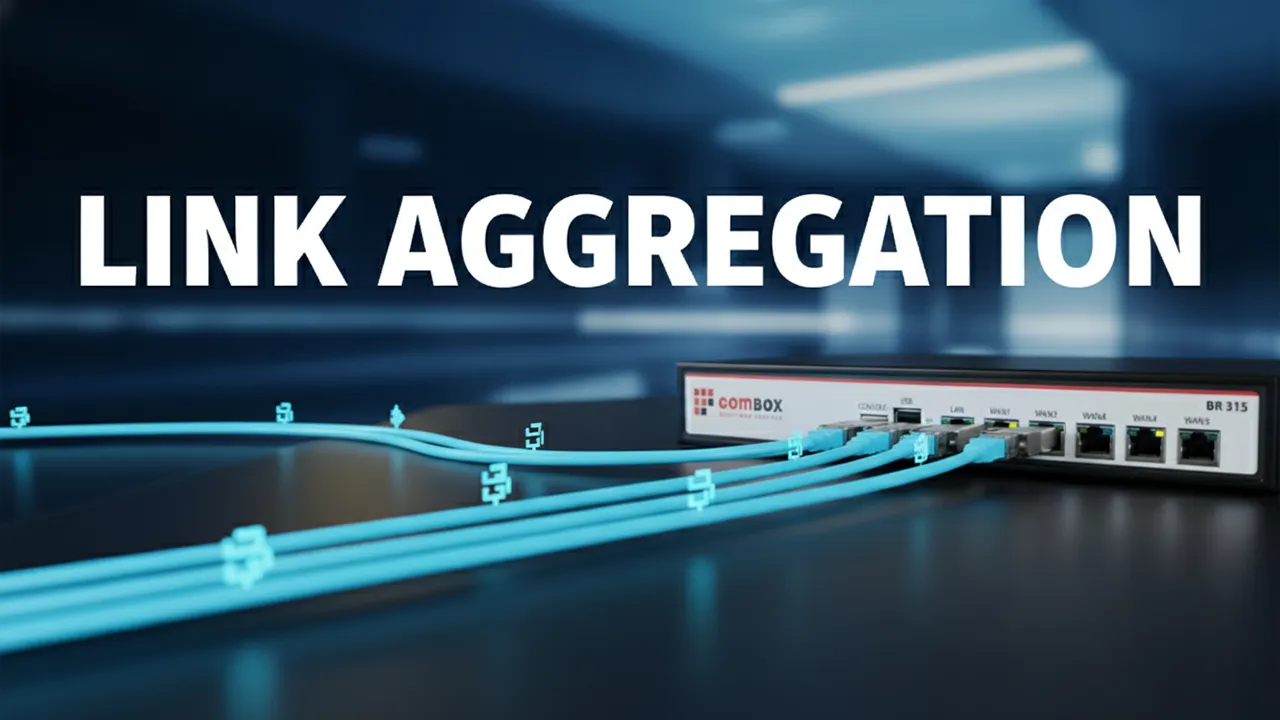
Why Link Aggregation Matters Today
Link aggregation has become essential for businesses that depend on continuous, high speed and reliable Internet access. As organizations adopt multiple fixed and wireless services such as fiber, 5G, Starlink and DSL, the need to merge these connections into one unified and stable pipeline has never been greater.
Short outages interrupt operations. Slow links reduce efficiency. Dependency on a single ISP creates risk.
This is where link aggregation unlocks transformative advantages.
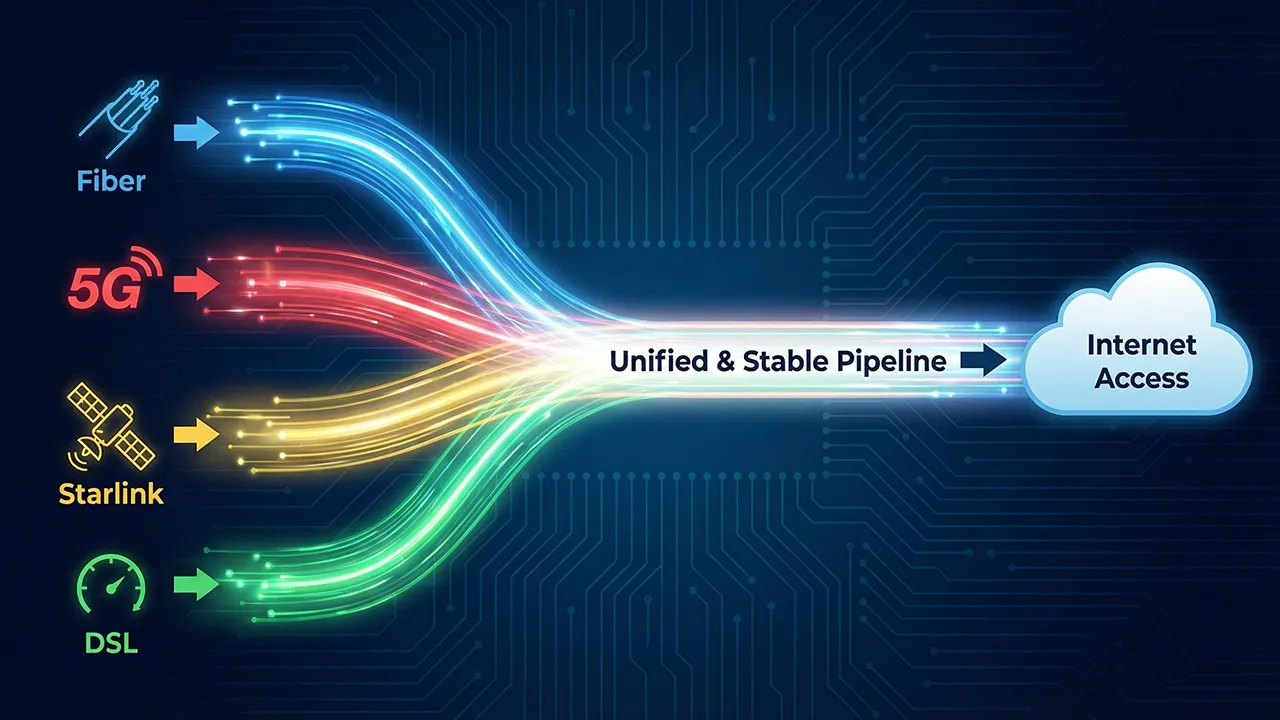
A comBOX unit is shown merging several connection types to demonstrate Link Aggregation
What Link Aggregation Really Means
At its core, link aggregation refers to the process of combining multiple WAN or LAN connections into one high throughput pathway. This can dramatically increase performance while ensuring resilience in case one link degrades or fails.
Traditional link aggregation commonly occurs at:
• OSI Layer 1 (physical)
• OSI Layer 2 (data link)
For example, advanced LTE categories like CAT6 or CAT12 combine several frequency bands to increase throughput. Similarly, network switches often aggregate multiple Ethernet ports to expand capacity.
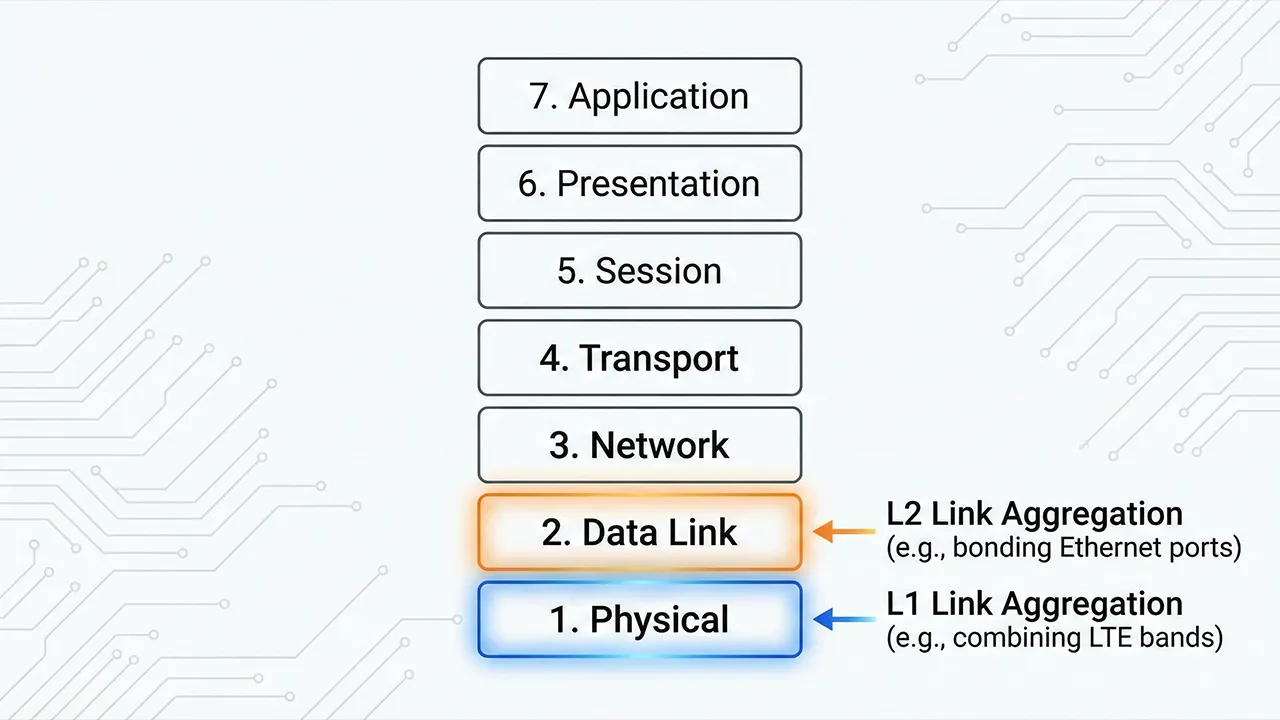
The image highlights where Link Aggregation occurs within the OSI model by marking the physical and data link layers
How Link Aggregation Works at Higher OSI Layers
As enterprise needs evolve, link aggregation at higher layers such as the network layer (Layer 3) has become vital. This method is often referred to as channel bonding, and unlike physical link aggregation, it does not require deep coordination with telecom operators.
This allows businesses to leverage:
• Wired broadband
• Satellite links
• Cellular 4G, 5G
• Hybrid connectivity mixes
Independent of carriers or local network constraints.
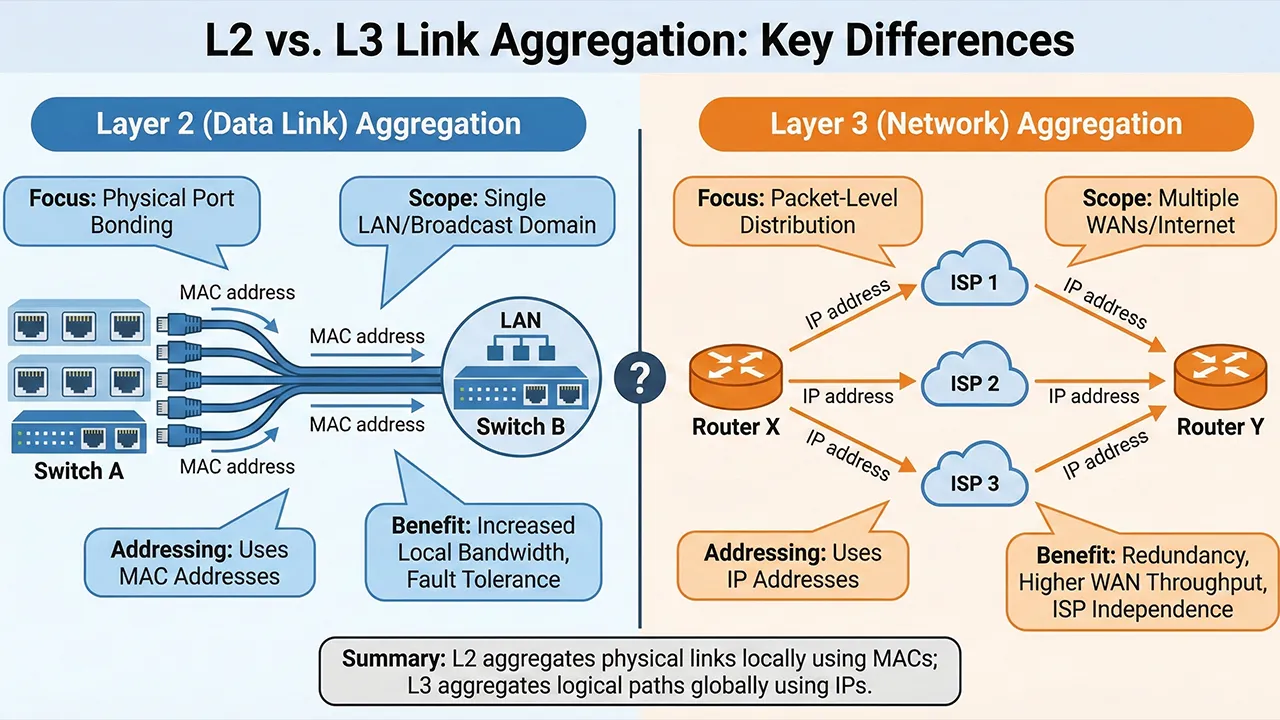
The graphic explains how Link Aggregation works at layer 2 and layer 3 highlighting scope focus and addressing
Connectivity Methods Explained
Load balancing, channel bonding and link aggregation are often mixed up, but each serves a different purpose. Load balancing distributes traffic by session, meaning each connection carries separate flows without increasing the speed of a single transfer. Channel bonding goes further by splitting traffic at the packet level, allowing multiple physical connections to work as one unified path. Link aggregation is a broader concept that includes both physical and logical techniques for combining multiple links into a single interface. comBOX applies advanced channel bonding with packet-level distribution to deliver maximum throughput and uninterrupted uptime for enterprise environments.
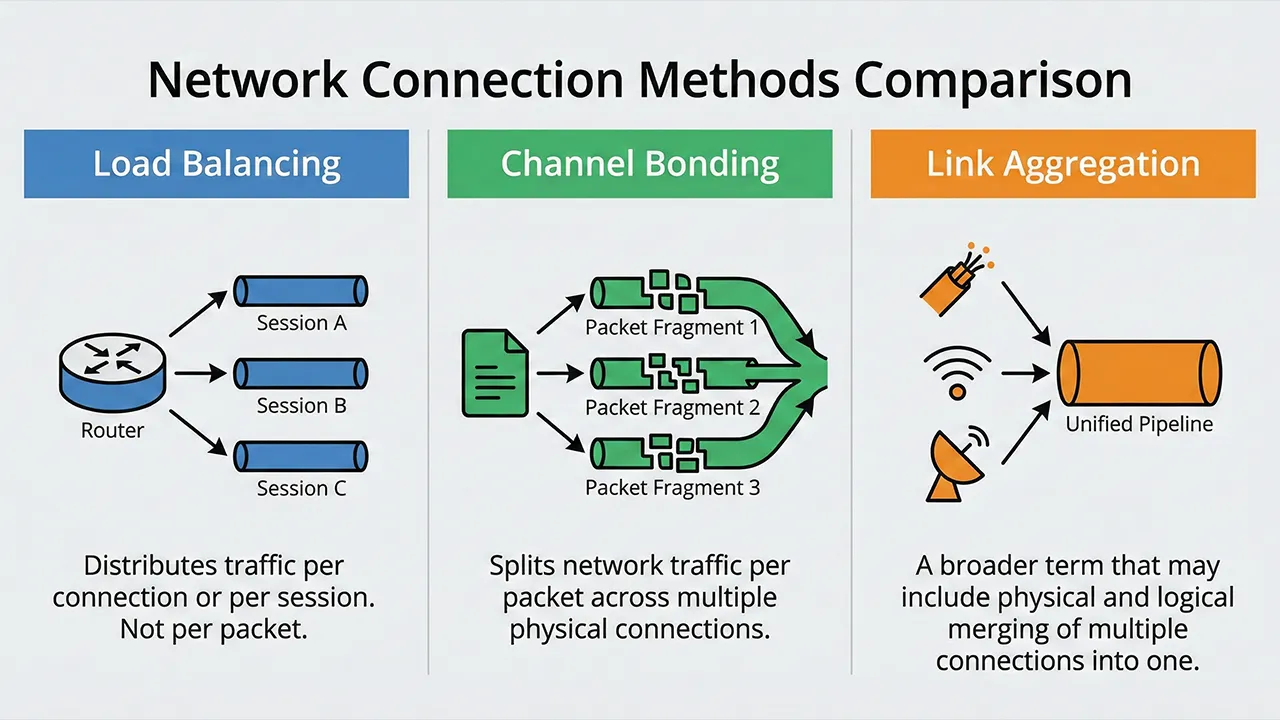
The image compares network techniques and highlights how Link Aggregation creates a unified connection pipeline
7 Powerful Benefits of Link Aggregation for Businesses
1. Higher Bandwidth Through Combined Capacity
When multiple WAN connections are combined, their speeds add together. A 50 Mbps DSL + 40 Mbps 5G + 20 Mbps Starlink segment can deliver a combined high throughput experience.
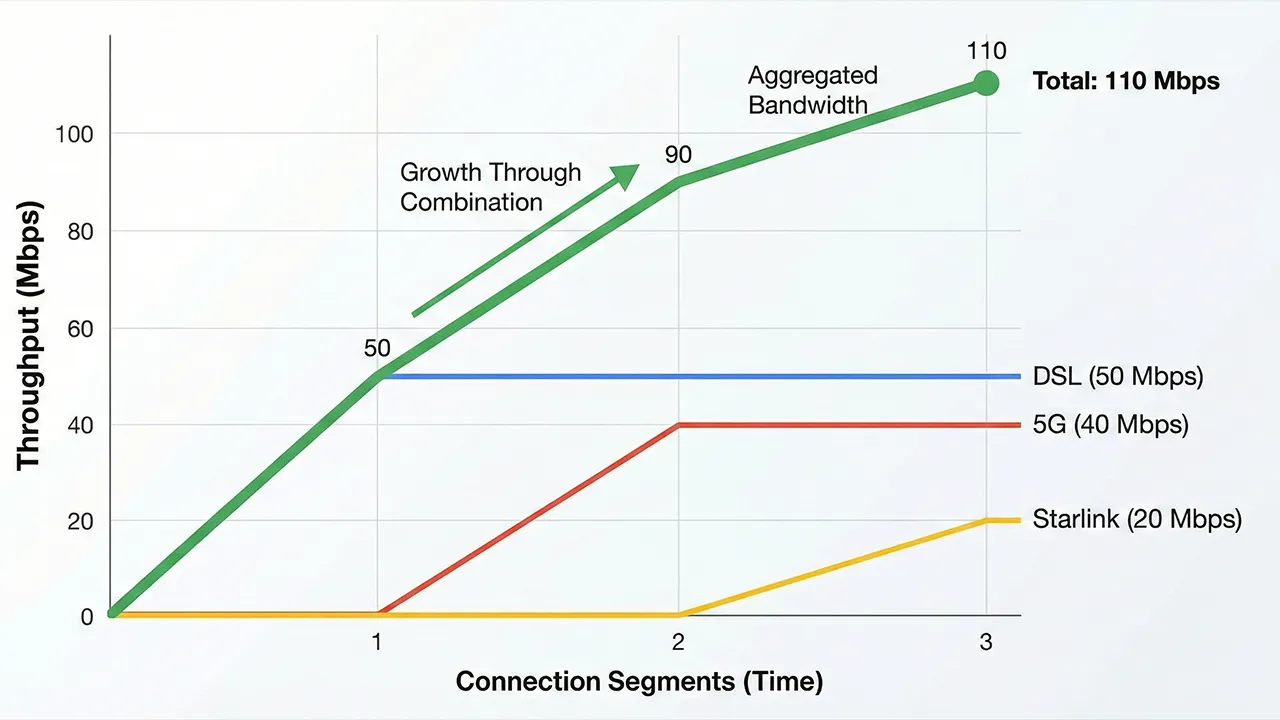
The chart illustrates how Link Aggregation boosts bandwidth by adding multiple connection sources over time
2. Ultra High Availability and Uptime
With link aggregation, no single ISP outage can bring a business offline. Traffic automatically reroutes to active links.
comBOX achieves seamless transparent failover with same IP continuity, ensuring that active sessions remain uninterrupted.
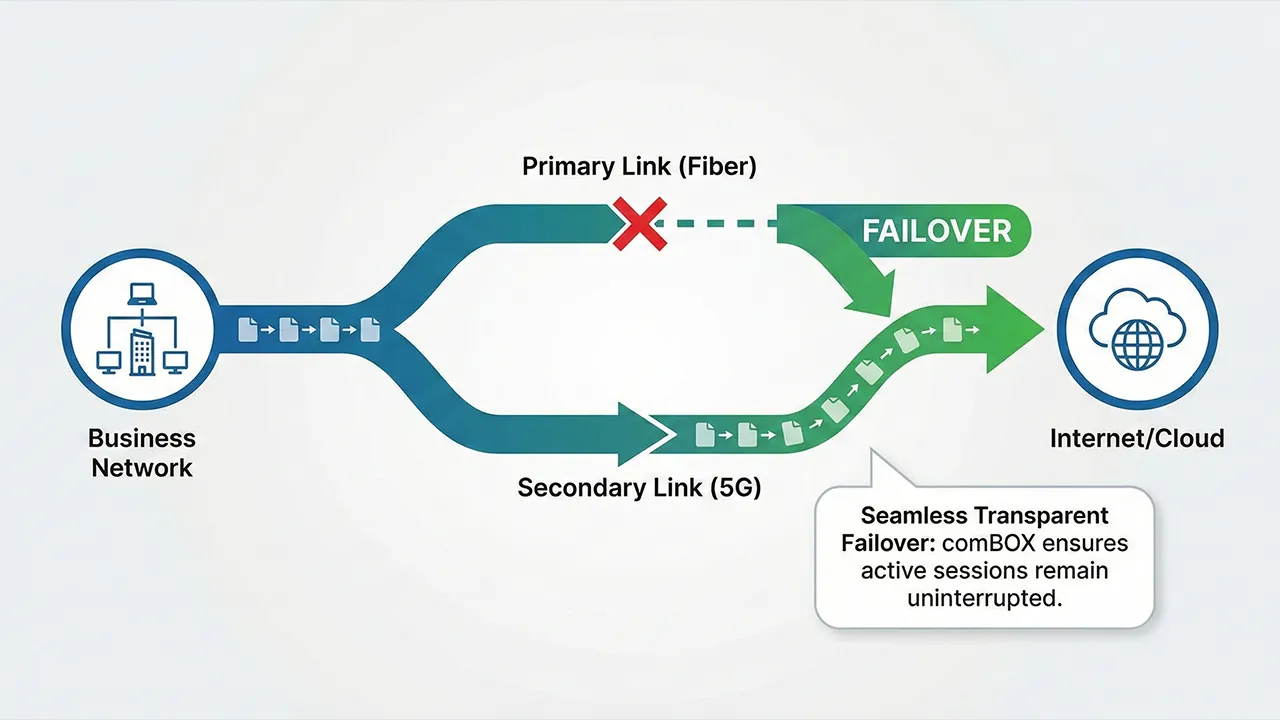
The image illustrates how Link Aggregation maintains connectivity by shifting traffic to a backup link during an outage
3. Reduced Dependency on a Single ISP
Businesses can use multiple carriers, including:
• Fiber
• 5G
• Starlink
• ADSL/VDSL
• VSAT
By blending connections, you gain independence from local limitations or service instability.
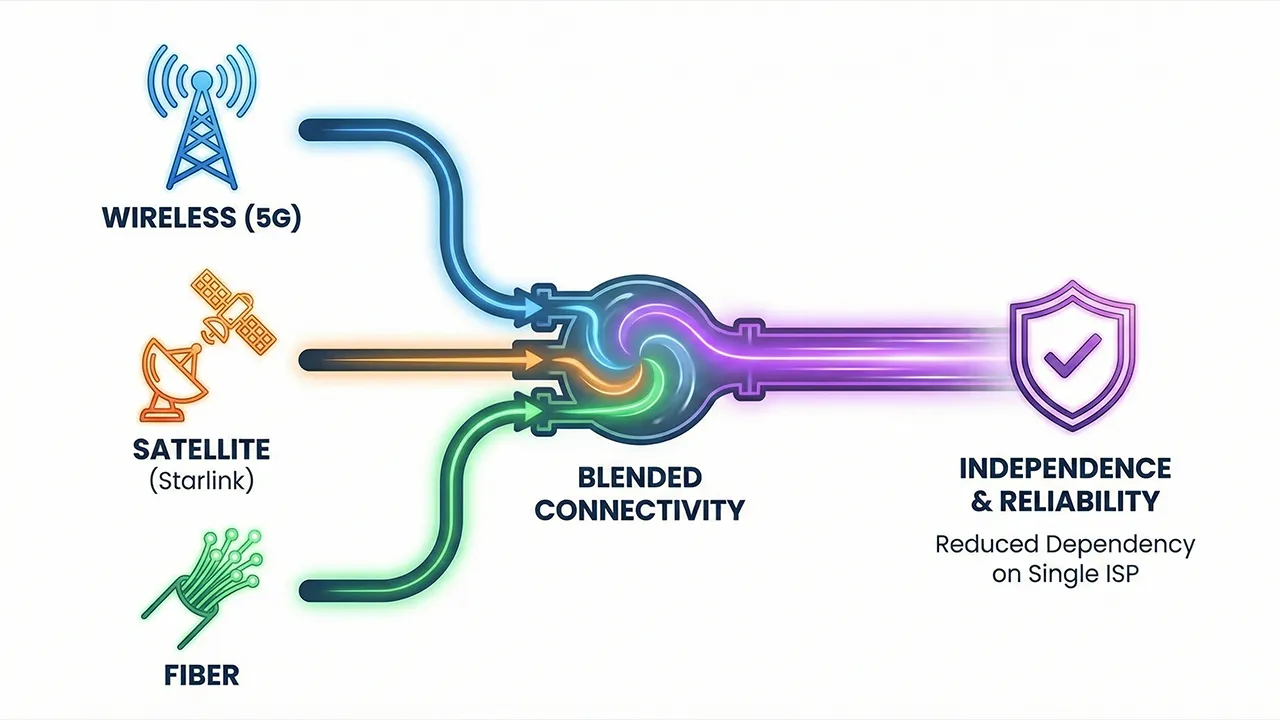
The diagram visualizes how Link Aggregation merges multiple connection types to increase reliability and reduce dependence on one ISP
4. Improved Application Performance
Real time applications thrive on packet-level link aggregation:
• VPN stability
• Cloud apps
• Video calls
• Remote desktops
• Streaming
• File transfers
comBOX enhances this even further using WAN optimization techniques such as compression, QoS, Forward Error Correction and packet-level TCP recovery
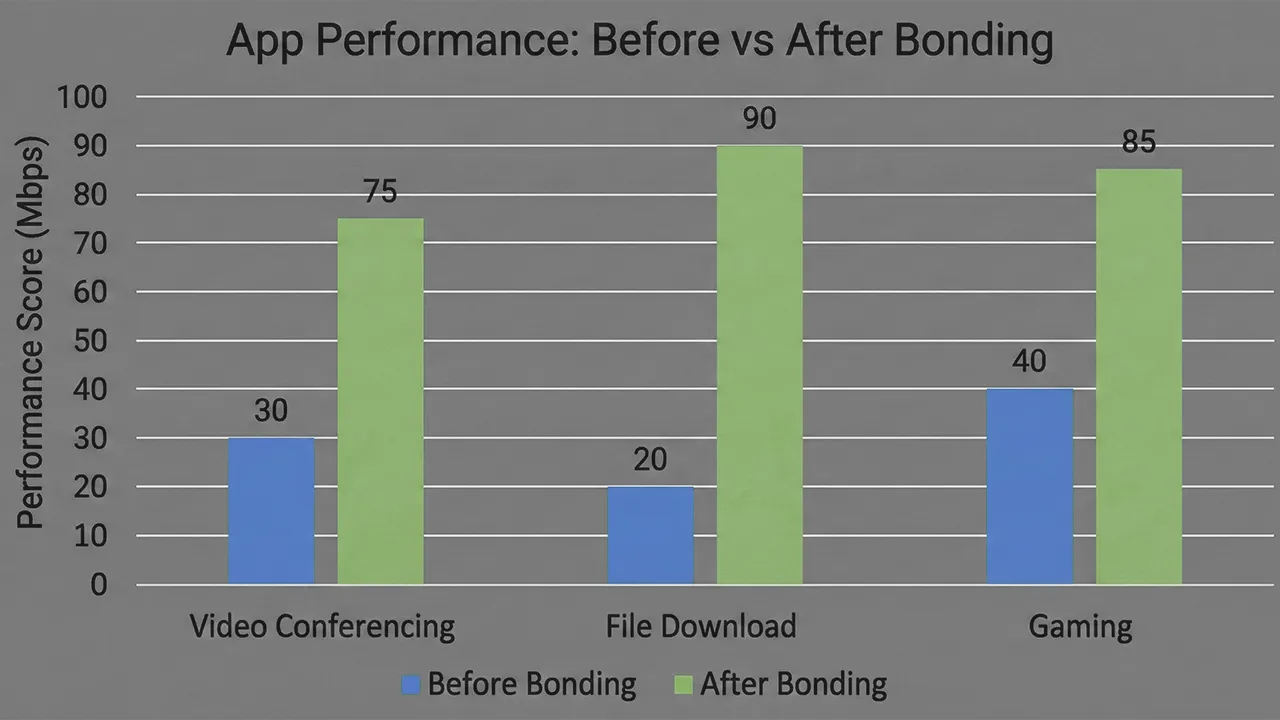
The chart shows how Link Aggregation significantly improves performance for video conferencing file downloads and gaming
5. Enterprise Grade Redundancy
With multiple connections active, link aggregation dramatically minimizes network downtime risk. ISPs, technologies and physical media types can be mixed for resilience.
comBOX also supports hardware redundancy clusters for mission critical networks
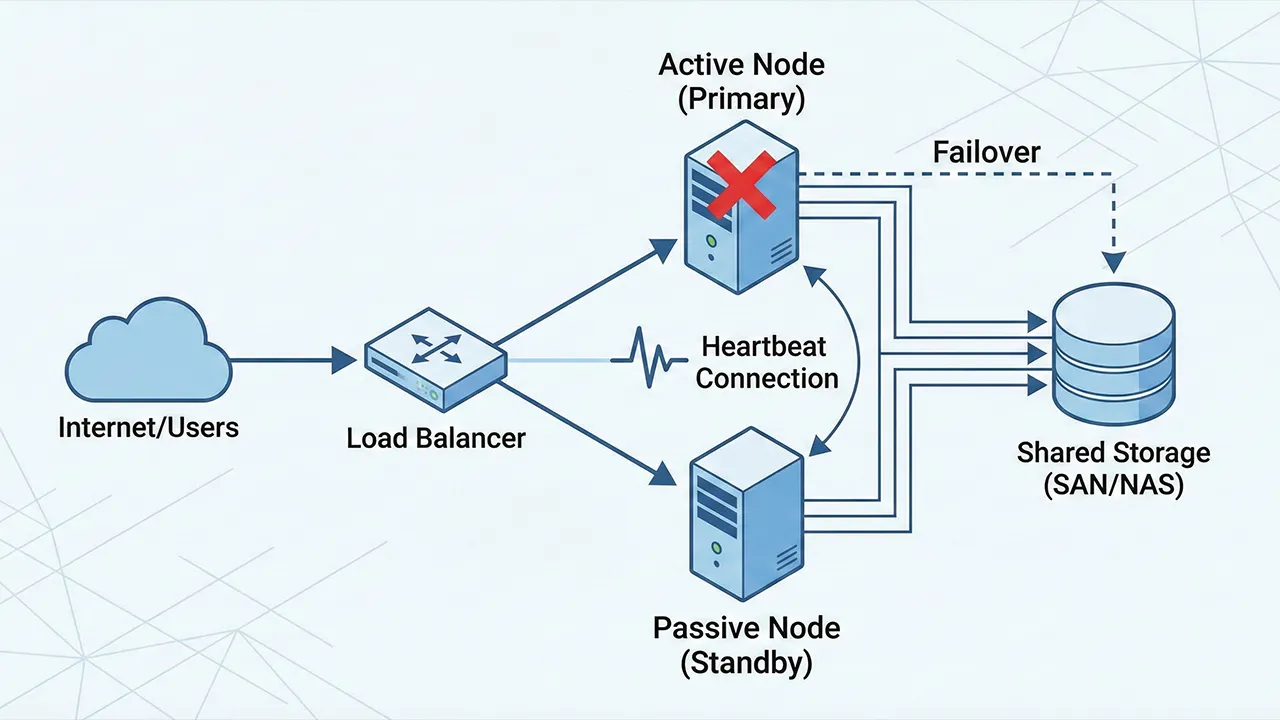
The image shows how Link Aggregation supports high availability by enabling seamless failover between active and standby nodes
6. Flexibility to Use Any Available Connection
Link aggregation allows combining technologies that normally cannot work together:
• Starlink + 5G
• VSAT + DSL
• 4G + Fiber
• Anything available locally
This is especially valuable for businesses in remote or rural areas with limited connectivity choices.
7. Cost Optimization with Better Resource Utilization
Instead of paying premium prices for a single high speed line, businesses can combine multiple affordable links to achieve enterprise-grade performance.
comBOX helps organizations cut costs through lower ISP fees, bandwidth efficiency, and intelligent QoS allocation.
How comBOX Enhances Link Aggregation with Industry Leading Technology
comBOX takes link aggregation beyond traditional methods by integrating advanced bonding algorithms and virtualization features.
Key technologies include:
Packet Level Distribution
Every packet is intelligently routed across active WAN paths, maximizing speed and reliability.
Real Time Link Monitoring
Performance analysis of jitter, congestion, loss and latency ensures optimal routing in real time.
Transparent Failover
Sessions continue uninterrupted even when links fail.
WAN Optimization Stack
Compression, FEC, TCP acceleration and bandwidth management boost performance dramatically.
Virtual Leased Line Technology
comBOX transforms multi WAN links into a single high performance virtual circuit.
Learn more via the comBOX VLL service pages
Real World Use Cases for Link Aggregation
comBOX link aggregation solutions support industries such as:
• Maritime connectivity
• Remote oil and gas
• Banking branches
• Hospitality
• Logistics and fleet operations
• Retail and POS networks
• Telecom alternatives
• Construction and temporary sites
Each use case benefits from:
• Higher uptime
• Stronger performance
• ISP independence
• Lower operational costs
Explore the comBOX use cases
FAQ
What is link aggregation at the network layer and why is it important?
Link aggregation at the network layer is the process of combining multiple Internet connections into one logical connection. This improves bandwidth utilization, allows better load distribution, and strengthens reliability for business applications that depend on stable and predictable connectivity.
How does network layer aggregation differ from traditional link aggregation at the data link layer?
Traditional aggregation at the data link layer requires identical connection types and matching configurations. Network layer aggregation, as described in the blog, is more flexible. It works with mixed connection types, different ISPs, and different performance profiles. This makes it far more suitable for real-world enterprise environments where link diversity is the norm.
What challenges arise when aggregating links of different speeds and characteristics?
Mixed links behave inconsistently. Faster links can outrun slower ones, creating latency gaps, buffering, or asymmetric performance. The blog explains that an intelligent aggregation algorithm must counter these imbalances by monitoring real time behavior and distributing traffic based on current link conditions.
How does link aggregation improve performance for modern cloud and real time applications?
Cloud applications, VoIP, video conferencing, and remote workloads rely on consistent throughput and low latency. Aggregation stabilizes the overall connection, mitigates the weaknesses of individual links, and ensures that time sensitive traffic flows across the most responsive paths.
What business environments benefit most from network layer link aggregation?
Any organization relying on multiple ISPs, hybrid connectivity, remote sites, or high availability architectures benefits significantly. Retail chains, logistics operations, branch offices, and cloud dependent teams all gain improved reliability, smoother performance, and better bandwidth efficiency.


